Shopify integration: keep your store, connect everything else
Shopify integration connects your store to one Elbuz catalog through the Admin API: products, prices and stock in both directions, supplier price lists, and Shopify orders in one list with Amazon, eBay and other marketplaces. You do not have to move away from Shopify.
Your store stays on Shopify. Elbuz does what Shopify does not do by itself: supplier prices, several sales channels and one order list.
Your Shopify catalog in Elbuz
Products come in with title, description, vendor, SKU, barcode, price, compare-at price, stock, tags, category and photos. Each size or color becomes its own card, and all of them stay linked as one family. Drafts and archived products come in switched off.
Inventory management
Elbuz sends prices and stock back to Shopify in bulk, on schedule, from your warehouses and supplier price lists. Posted orders from every channel reserve stock in one place.
New products and collections
A product created in Elbuz goes to Shopify with its card, price and stock, and your categories become collections. For products with variants, you can also send only prices and stock and leave the card as it is.
Order management
Shopify orders become customer orders on schedule or at once by webhook, in the same list as marketplace orders. From there they are processed like any other order — see order management.
Your own markup rules
Each template takes its own price or calculates it by formula, so the store and each marketplace can have different prices from one catalog. Markup rules.
Elbuz works through the Shopify Admin GraphQL API. Your own integration needs a developer; here you only paste an access token.
TokenAdmin APIan access token of a custom app from your Shopify Dev Dashboard; the token and the store domain are all Elbuz needs
Limitscost-basedShopify limits requests by query cost; when it throttles, Elbuz pauses and repeats the call
Webhookssigned orderswith the app’s client secret, Elbuz checks the webhook signature and creates the order the moment the customer places it
For developers: Shopify documents the API on shopify.dev. For a store owner, the steps are in How to connect Shopify.
3
How it works: Shopify as one channel of your catalog
Products live in one catalog, and the store and each marketplace get their own template.
Catalogimported from Shopify, supplier price lists and your warehouse
Shopify templateits own selection, price rule and schedule
Synccards, prices and stock go to the store
Orders backby schedule or webhook, in one list with marketplaces
Elbuz does not replace your theme or checkout. Moving to Elbuz CMS is not required.
4
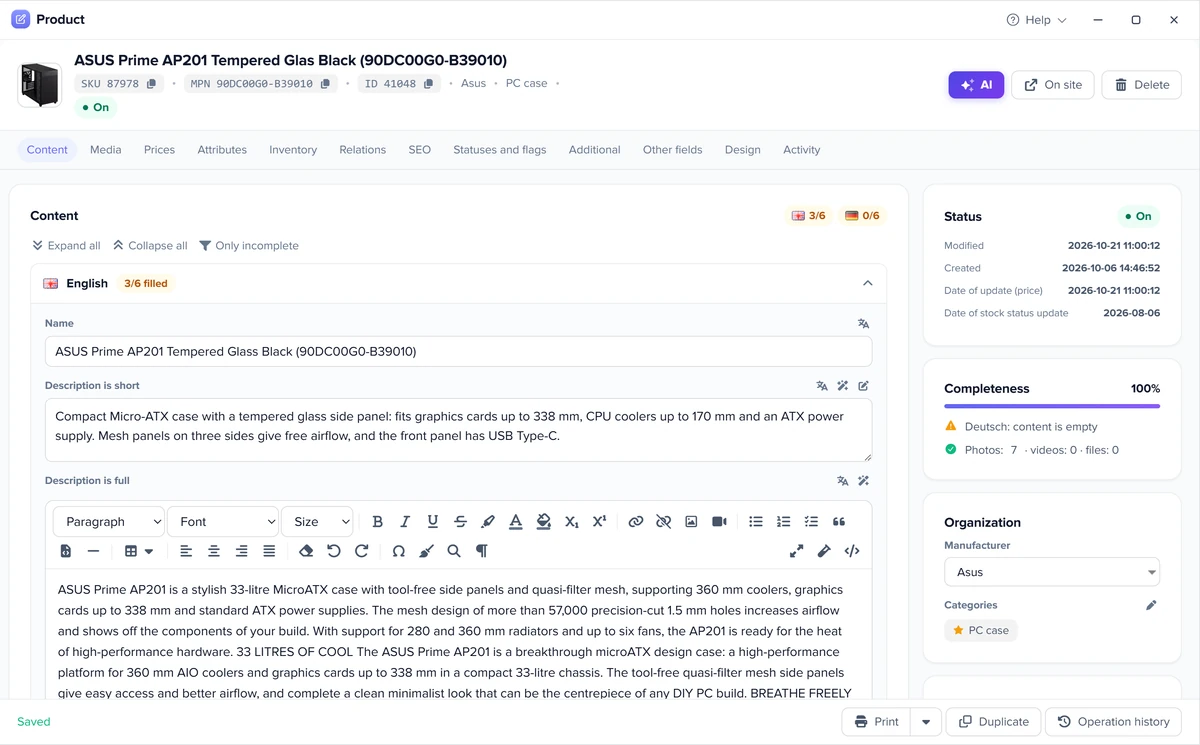
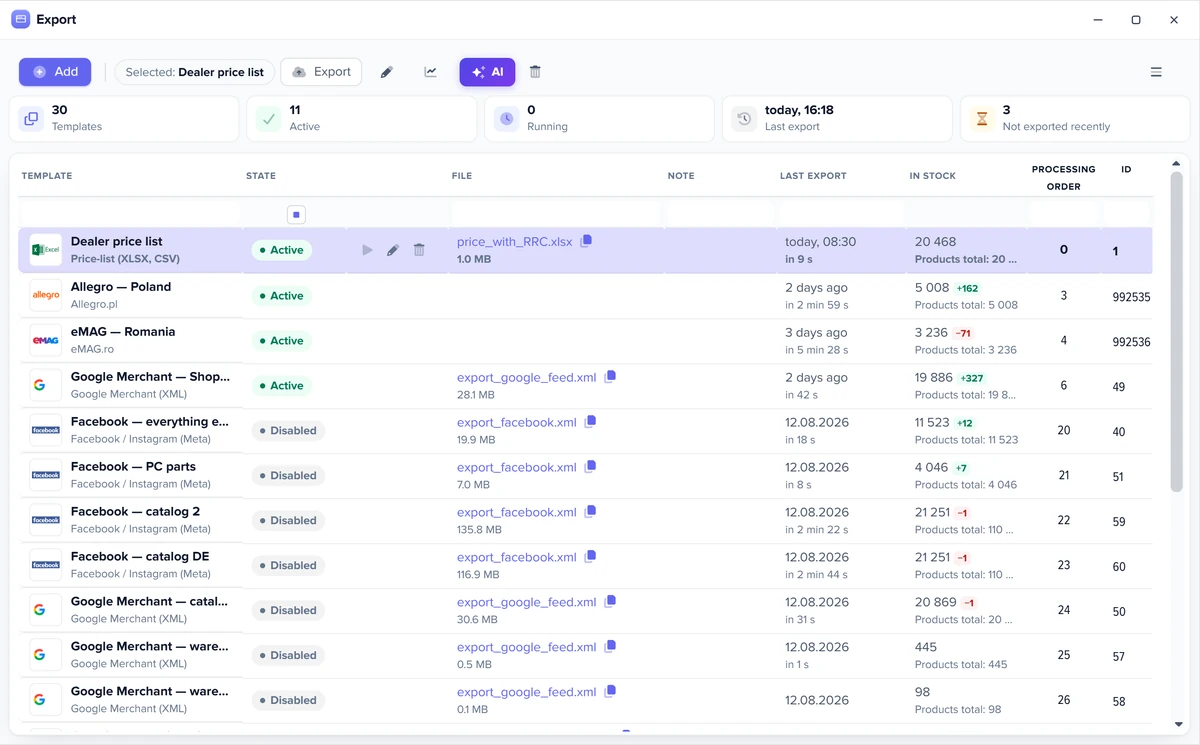
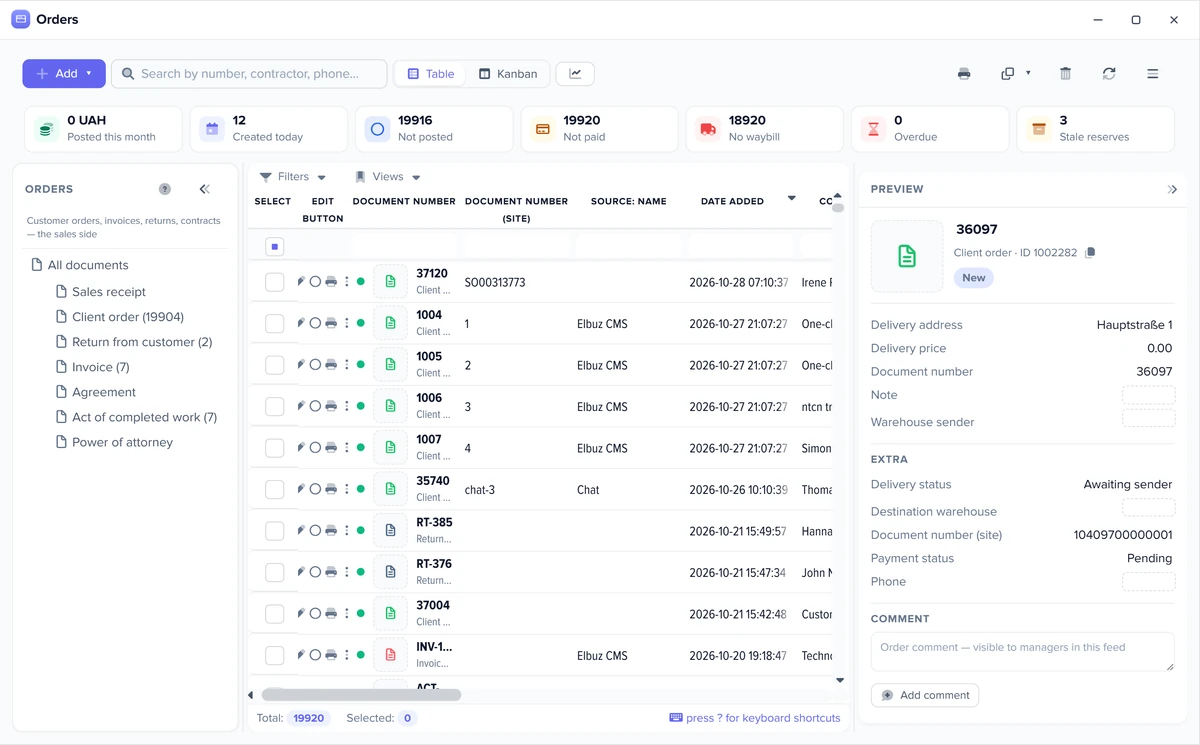
Elbuz screens: catalog, export templates and orders
The same windows run every marketplace: the product card, the export templates and the order list.
One product card feeds every marketplaceExport templates: one per marketplace and feedMarketplace and website orders in one list
5
How to connect Shopify to Elbuz
Two modes: a quick look with only the store address, and full work with a token.
Templatecreate an import template of the Shopify type; one template, one store
Quick modeenter the store address: Elbuz reads published products without a key
Tokencreate a custom app in the Dev Dashboard and paste its Admin API access token for the full catalog and orders
Webhookoptionally add the client secret to receive orders at once
Exportset up the export template for cards, prices and stock, and schedule both
No coding is needed. Support moves your data free of charge.
6
Automation: what runs without you
Set up the template once: exports and checks then run on their own, and you step in only where a decision is needed.
Check before every export
Before each run Elbuz counts how many products will go out and how many are in stock, and compares that with the previous run. A stock drop over 30%, a product count drop over 50% or an empty selection triggers a warning or stops the export, as you choose, for all templates or for one.
Only changed products
A template option sends only new and updated products: those changed in the card, by a price list or through the API since the last successful send, not the whole catalog every time.
Available stock
If you keep warehouse records, a setting exports available stock: the marketplace gets the quantity minus stock reserved by posted orders and blocked goods. The physical stock in the database does not change.
Schedule and Flows
Each template runs on its own schedule. A process (Flows) chains the steps: load price lists, update the catalog, export to marketplaces and send a notification with the result. Workflow automation.
Automatic rules
A new order, or a change to an order during import, runs a rule: event, condition, action. The customer gets an email or SMS, a manager gets a task, and a document is created on its own. Marketplace orders follow the same rules as website orders.
You can also give these jobs to an AI agent in plain words: load price lists, update the catalog, run an export, fill product cards. AI agents.
7
Shopify integration FAQ
Do I have to leave Shopify to use Elbuz?
No. The store, theme and checkout stay on Shopify. Elbuz adds supplier prices, marketplaces and one order list around it.
Can Elbuz manage Shopify inventory?
Yes. Stock comes from your warehouses and supplier price lists, and the export template sends it to Shopify in bulk on schedule. Posted orders from all channels reserve stock in one place.
Can I connect Shopify to Amazon or eBay through Elbuz?
Yes. The same catalog feeds Shopify, Amazon and eBay, each with its own price and schedule, and all orders land in one list.
Does it work as a CRM for Shopify?
Yes. Shopify orders come into the Elbuz CRM together with customers and orders from other channels.
Do I need a Shopify API key?
For a quick look, only the store address. For the full catalog and orders, an Admin API access token of a custom app created in your Shopify Dev Dashboard.
How do Shopify orders reach Elbuz?
On schedule, or at once by webhook if you add the client secret of your app. Each order becomes a customer order with the customer and items.
The website and marketplaces department joins your AI company along with every other department. €50 on your balance after sign-up and 14 days to test the integration on your own products.