

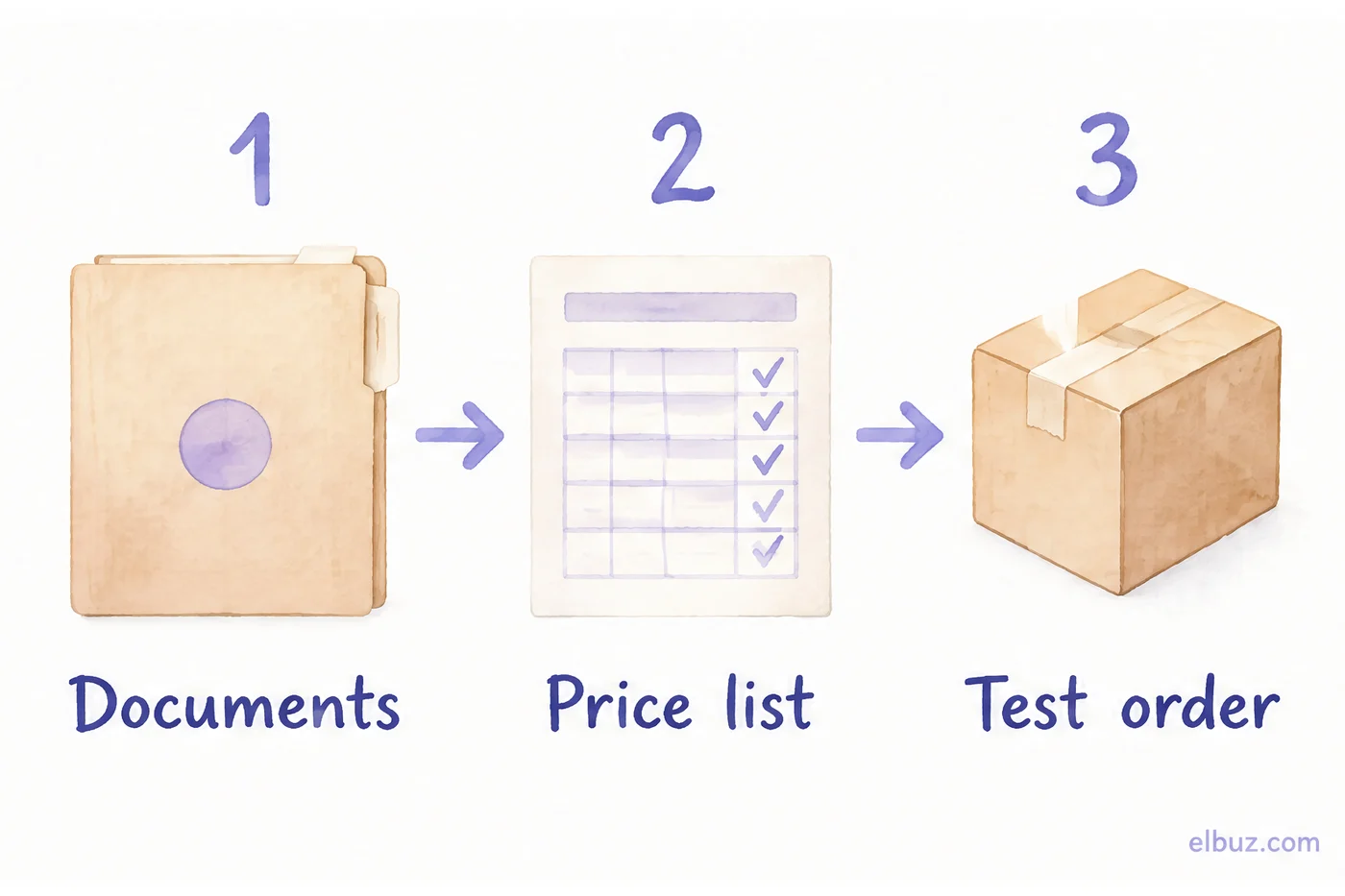
Dropshipping suppliers are found in supplier directories, on the websites of manufacturers and authorized distributors in your niche, on sourcing marketplaces and at trade shows. Vet them before the first sale in three steps: documents and reputation, a price list checked against real stock, and a test order to yourself. Shortlist two or three, score them on the same criteria and sign an agreement with the winner.
The usual beginner mistake is to pick the lowest wholesale price. A few percent of difference disappears on the first order that turns out to be out of stock, or on a parcel that takes two weeks. Below: a table of checks with red flags, a two-day way to test a price list, what to measure on a test order and how to compare candidates with a weighted score.
When people go looking for a supplier
The niche is chosen and the store is almost ready. The search goes “dropshipping suppliers”, “best dropshipping suppliers USA”, “free dropshipping suppliers”, and returns ranked lists of platforms, each promising fast shipping and high margins. The next questions are “what is the best supplier for dropshipping”, “how do I find out who supplies a product I see in other stores” and “can I be sued for dropshipping”.
“Which supplier is the best” has no answer at the level of a name: every niche has its own suppliers, and reliability only shows up in checks. The useful question is how to vet this particular one.
Where to find dropshipping suppliers
Look where a company says outright that it works with dropshippers: then you don't have to persuade anyone to ship single units.
- Dropshipping supplier directories. They collect companies that ship from one unit. Use them for a shortlist, not as proof of reliability: being listed is not the same as passing checks.
- Manufacturers and authorized distributors. On a brand's website look for “Wholesale”, “Become a retailer”, “Partners” or “Where to buy”. A distributor rarely says “dropshipping”, but often agrees to ship single units once you sell noticeable volume.
- Sourcing marketplaces such as AliExpress (how the model works there and what it costs after the new EU import fees — in AliExpress dropshipping) or Alibaba.com. Huge choice, but most sellers ship from overseas: ask where the warehouse is, because that sets the delivery time you can promise your customers.
- Trade shows and wholesale B2B platforms of your niche — to reach companies that aren't in any directory yet.
- Suppliers in another country mean different delivery times, returns and taxes. How the whole model works, from niche to first order — in how to start dropshipping. An example of how this works in one EU market: dropshipping in Poland.
How to find out who supplies a product other stores already sell: search by the manufacturer's part number or the barcode (GTIN/EAN) from the product page, or run the photo through Google Lens. Then ask the manufacturer for its list of authorized distributors in your region. Identical photos in many stores usually point to a common supplier.
10 checks before your first sale
Check documents, the price list, terms and service. Each line has a way to check it and the sign that should make you stop:
| What to check | How to check it | Red flag |
|---|---|---|
| 1. The company is registered | Find it in the official register: Companies House in the UK, the business registry of its state in the US, the national register in the EU. Check an EU VAT number in VIES | No legal name or registration number; the register shows “dissolved” or a different name |
| 2. No pattern of complaints | Search the legal name and number with “complaints”, “lawsuit”, “refund”; read reviews from other sellers, not only from buyers | Repeated reports of unpaid refunds or orders that never shipped |
| 3. Price list format | Ask for a link to the price list: XML, CSV, Excel, API | Prices only as images or chat messages |
| 4. Stock matches | Stock test — section below | Two or more mismatches out of ten |
| 5. The price list updates | Compare two files taken 1–2 days apart | Prices and stock don't change for weeks |
| 6. Wholesale price and MAP | Ask whether there is a minimum advertised price and what happens if you sell below it | A MAP exists but isn't written down anywhere |
| 7. Shipping time | Ask for the daily cut-off for same-day shipping; confirm it on the test order | “We ship when it's packed” with no time given |
| 8. Payment and invoices | How and when you are charged for each order, and whether you get an invoice with VAT details | Charges without invoices, or payment terms “as soon as possible” |
| 9. Returns and defects | Who pays shipping in each case, where customers send items back, how long returns are accepted | “No returns”, or a window shorter than the 14 days EU consumers are entitled to |
| 10. Content for listings | Look at photos, specifications and descriptions in the feed | One photo and no specifications: you will build every listing from scratch |
Lines 7 and 9 are where your legal duties sit, not the supplier's. In the US the FTC Mail Order Rule makes the seller who takes the order responsible for shipping on time, even when a drop-shipper fulfils it. In the EU an online buyer can cancel within 14 days without giving a reason. Your supplier's terms have to let you keep both promises.
How to test a price list: the stock check
Take 10 random products marked “in stock” in the price list and 3 marked “out of stock”, and ask the sales manager about each one separately, without saying where the list came from. Two days later repeat with a fresh file. In two days you see both how accurate the stock is and how often the file really updates.
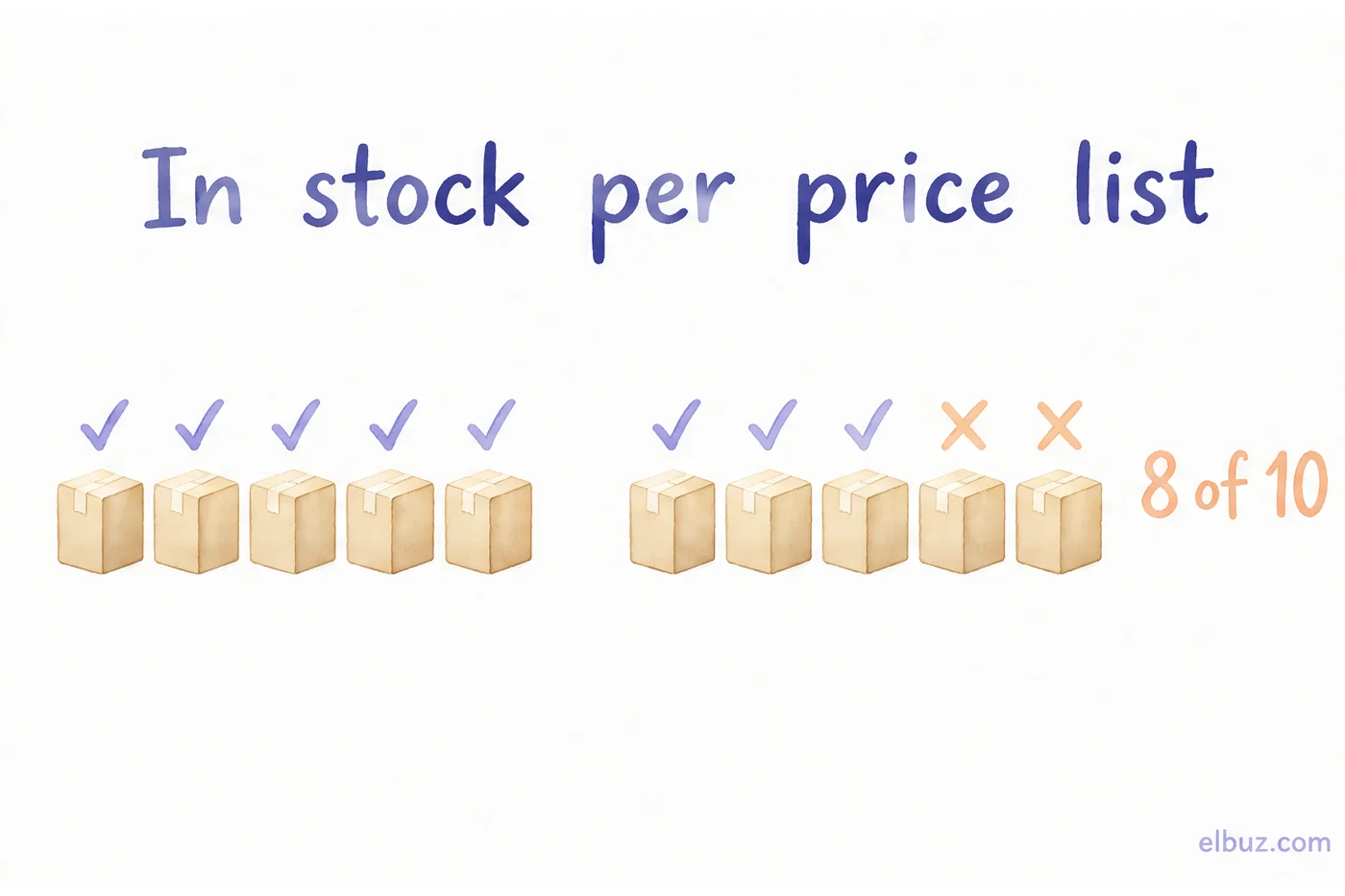
How to read the result: if 2 of 10 “in stock” products are actually missing, roughly every fifth order will have to be cancelled or wait for a restock. If “out of stock” products are suddenly available, the supplier updates the file less often than it claims. Either way, ask how often the file is refreshed and repeat the check before you start paying for ads.
Test order: what to measure
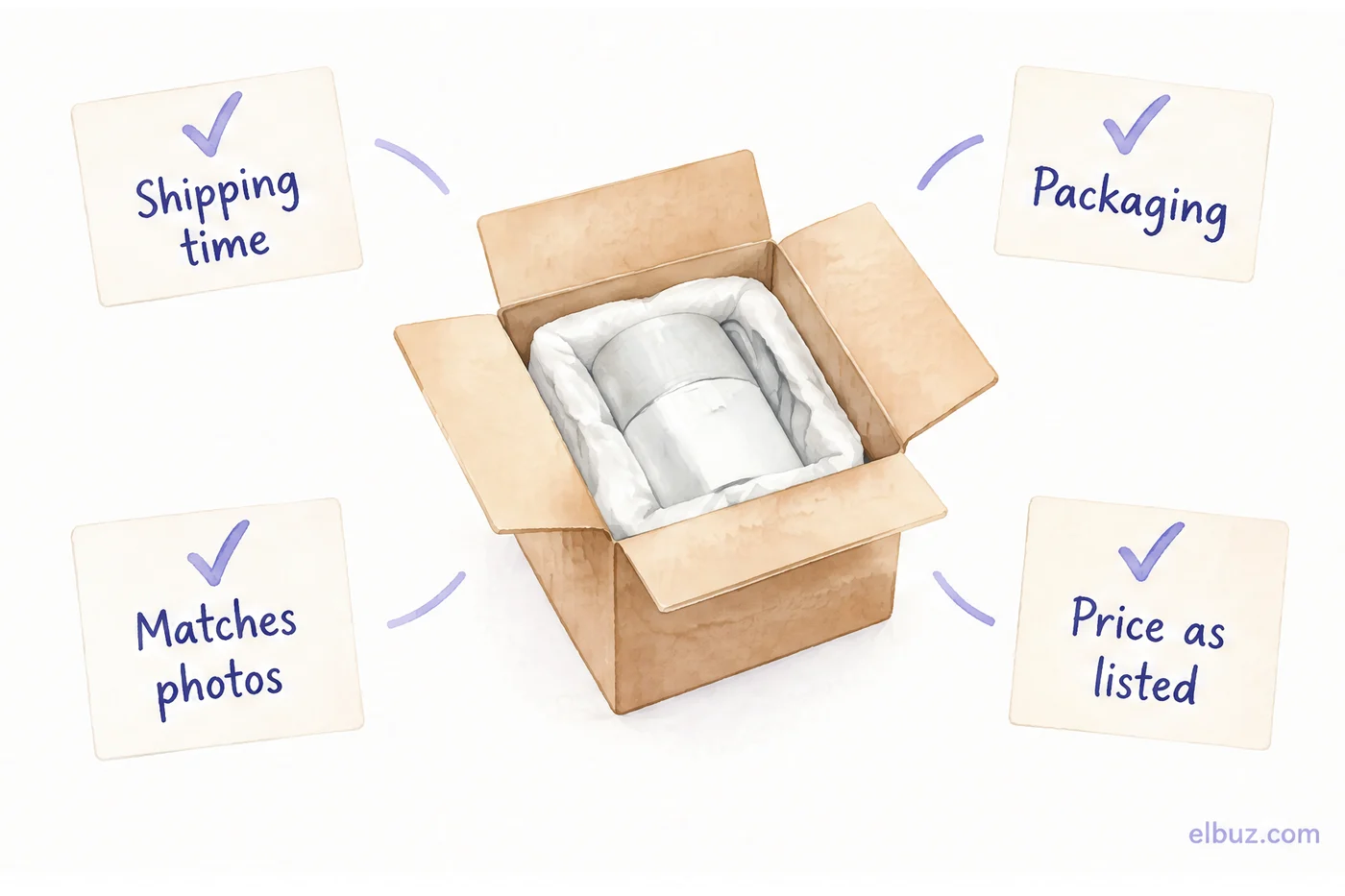
A test order tests the whole chain, not just the product: place it exactly as you will place your customers' orders — to a friend's address, through the channel you will actually use. Then measure:
| What to measure | What to write down |
|---|---|
| Shipping time | Hours from passing the order to a tracking number, and days to delivery |
| Packaging | Would you hand this parcel to a customer; no supplier invoice, prices or advertising inside |
| Product | Matches the photos and description, complete, in new condition |
| Price | You were charged the price from the price list on the day of the order |
| Money | When the charge appeared and whether the invoice matches it |
| Return | Return the test item: how fast it was approved, where to send it, when the money came back |
The return test is the one people skip most often, and it is the one that shows how a supplier behaves when something goes wrong. Place a test order with every candidate — then you compare them on the same facts.
How to compare several candidates
Give each criterion a weight according to how much it affects your money, rate the candidates from 1 to 5 and calculate a weighted score: score = sum (weight × rating) ÷ 5, maximum 100.
Illustrative example for the arithmetic; the ratings are not about real companies. Weights: stock accuracy 30, shipping time 20, wholesale price 20, returns 15, content 15 — 100 in total.
| Criterion (weight) | A | B | C |
|---|---|---|---|
| Stock accuracy (30) | 5 | 3 | 4 |
| Shipping time (20) | 4 | 5 | 3 |
| Wholesale price (20) | 3 | 5 | 4 |
| Returns (15) | 4 | 2 | 5 |
| Content (15) | 3 | 4 | 5 |
| Score | 79 | 76 | 82 |
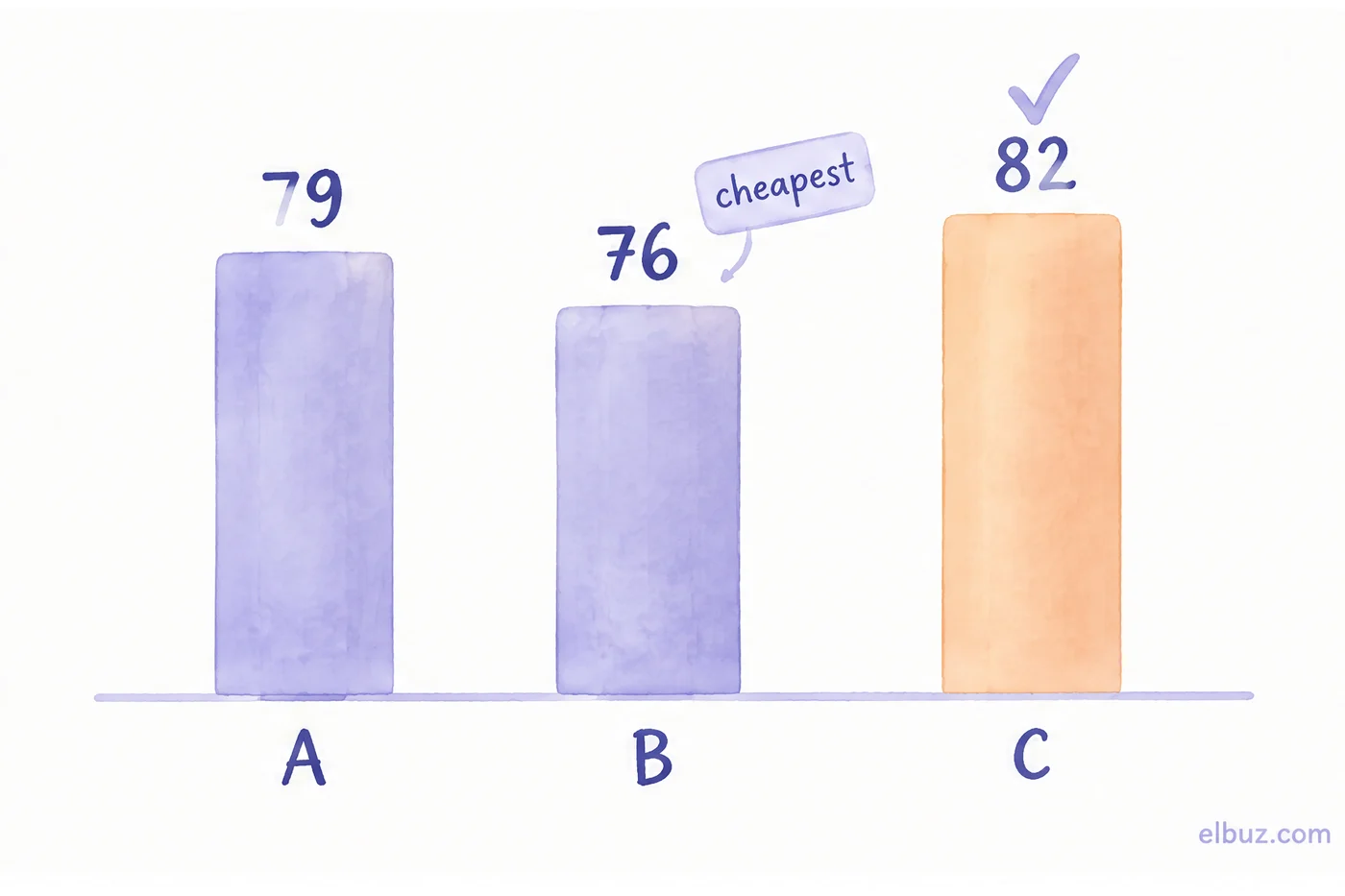
Calculation for C: (4 × 30 + 3 × 20 + 4 × 20 + 5 × 15 + 5 × 15) ÷ 5 = 410 ÷ 5 = 82. The cheapest, B, loses: a low wholesale price doesn't make up for weak stock accuracy and poor return terms. Adjust the weights to your niche: for clothing returns weigh more, for consumables stock accuracy does. To see what the wholesale price leaves you after markup, run your numbers through the profit margin calculator.
How many suppliers to start with: one main supplier is enough, but keep a second one in reserve for your best sellers, so that one supplier running out doesn't stop your sales.
What to put in the supplier agreement
Write down everything you checked: a verbal promise about shipping time or returns is worth nothing in the first dispute. Fix in writing:
- the wholesale price, the MAP and what happens if you sell below it;
- the price list format, the file URL and how often it updates;
- how the supplier announces price changes, and at what price it ships an order already accepted;
- the right to use product photos and descriptions;
- shipping time, blind shipping (your name on the parcel, no supplier prices inside) and what happens if the time is missed;
- returns and defects: who pays, the return address and how quickly you get the money back;
- how the cooperation ends and what happens to orders in transit.
There is no single standard dropshipping agreement; have a lawyer or accountant review the form you sign.
When you have several suppliers
Finding and vetting suppliers isn't a one-off: the range grows, and some suppliers drop out. Once a supplier has passed your checks, Elbuz connects it by its price list: it imports the feed (Excel, CSV, XML or API) on a schedule, matches products to your catalog and updates prices and stock in your store — see dropshipping automation with supplier feeds. Selling prices are calculated by your markup rules, so a new wholesale price doesn't mean editing prices by hand.
Who doesn't need it: the software won't do the checks from this article — the call to the sales manager, the stock test and the test order are yours. With one supplier and a few dozen products a spreadsheet is enough.
Supplier feeds with ElbuzPrices and stock from your suppliers on schedule, 14 days free
Frequently asked questions
What is the best supplier for dropshipping?
There is no single best one: the right supplier is the one that passes your checks for your niche and ships fast to your customers' country. Compare two or three candidates with the weighted score, not by the lowest price.
How do I find dropshipping suppliers?
In directories of companies that ship single units, among authorized distributors of brands in your niche, on sourcing marketplaces and at trade shows. Shortlist two or three and vet them before the first sale.
How do I find out who supplies a product?
Search by the manufacturer's part number or barcode, or run the photo through Google Lens, then ask the manufacturer for its authorized distributors. Identical photos in many stores usually point to a common supplier.
How many suppliers do I need to start?
One main supplier is enough if it has passed your checks. For best sellers keep a second one in reserve, so that one running out doesn't stop your sales.
Do I need a contract with a dropshipping supplier?
Yes: without one, a disputed return, a missed shipping date or a price change is settled on words. There is no standard form; have a lawyer review it and use the list of clauses.
Can I be sued for dropshipping?
Yes, because to the customer you are the seller. In the US the FTC holds the seller responsible for shipping delays even when a drop-shipper fulfils the order, and in the EU your customers have 14 days to cancel an online purchase — choose suppliers whose terms let you meet both.
Sources
- U.S. Federal Trade Commission, Business Guide to the Mail, Internet, or Telephone Order Merchandise Rule (shipping times, delay notices, seller liable for drop-shippers) — ftc.gov.
- Your Europe (European Union), returns and the 14-day right of withdrawal for online purchases — europa.eu.
- Your Europe, checking a VAT number in VIES — europa.eu; VIES — ec.europa.eu.
- Companies House, company search (UK) — find-and-update.company-information.service.gov.uk.
- U.S. Small Business Administration, Register your business (state registration with the Secretary of State or a business agency) — sba.gov.
Checked on November 1, 2026.


