

Cash on delivery (COD), also called collect on delivery, is a payment method where the buyer pays for an online order when the parcel arrives — in cash or by card to the courier — and the carrier transfers the money to the seller. In Europe it is a mainstream checkout option: according to DHL, more than 60% of online shops in Poland, Spain, Czechia, Hungary and Romania offer it, and around 80% in Slovakia and Bulgaria.
For the buyer, COD removes the risk of paying a shop they do not know. For the seller, it costs more than the carrier's fee suggests: parcels that the buyer refuses or never collects travel both ways at your expense, and in the EU the buyer still keeps the 14-day right to return. Below: how the money moves, where COD is common and what carriers charge, the full monthly cost of COD on illustrative numbers, and five ways to cut refusals.
When stores start asking about COD
Usually when a store starts selling to Central or Eastern Europe, or when competitors offer "pay on delivery" and the store does not. The owner searches for "cash on delivery ecommerce", "is cash on delivery risky" and "which couriers do COD", and finds definitions written for shoppers.
The question that matters is different: how much COD costs you per month once the refused parcels are counted. The fee is in the carrier's price list; the refusals show up in the invoice a month later.
How cash on delivery works
Cash on delivery works in five steps, and the money for the goods passes through the carrier:
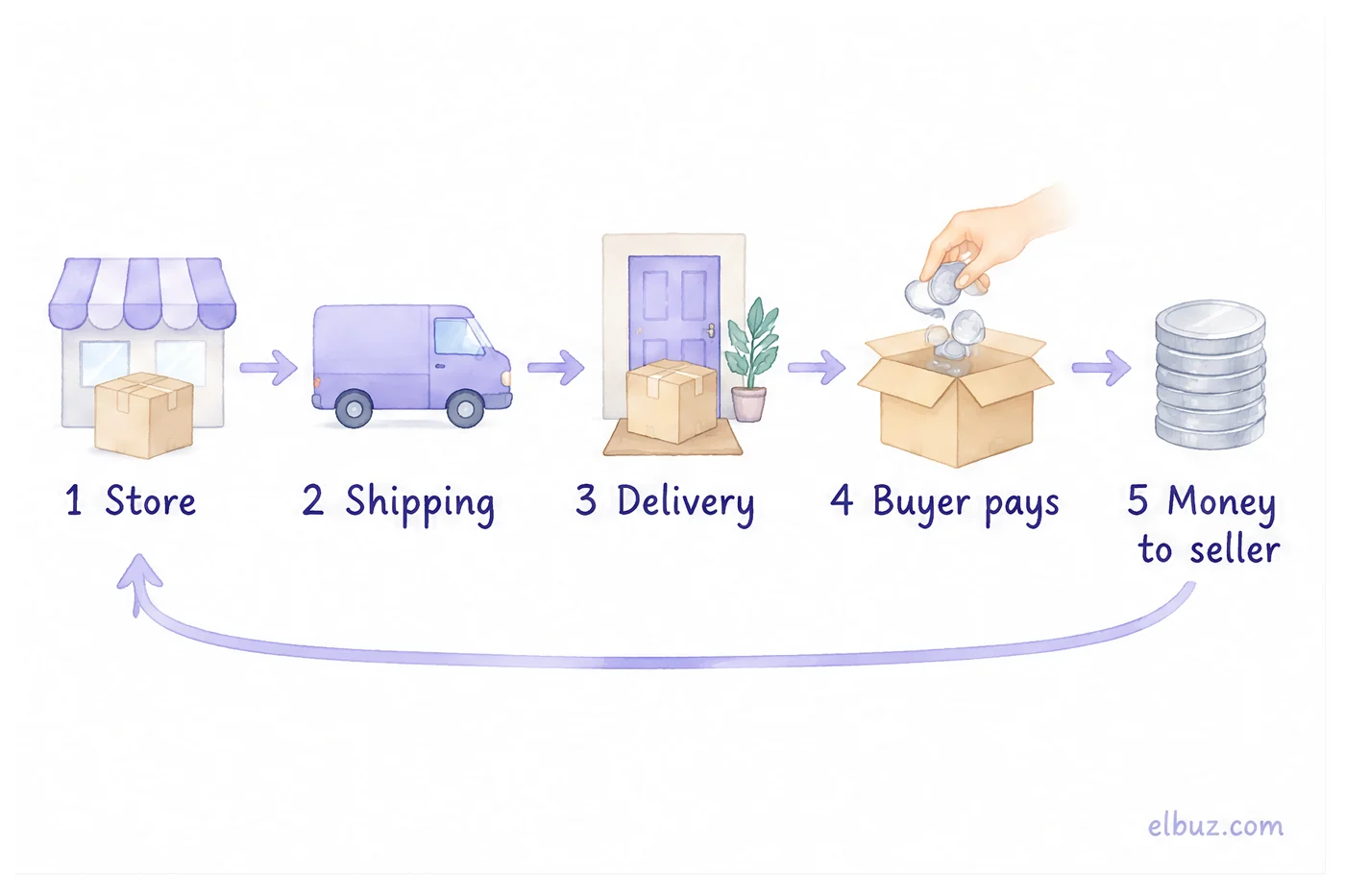
- The store books the shipment with COD and enters the amount to collect — the order total the buyer has to pay.
- The carrier delivers the parcel to the door, a parcel shop or a locker, depending on the service.
- The buyer pays the courier in cash or, where the carrier supports it, by card; GLS in Poland, for example, also accepts card and BLIK.
- The buyer gets the parcel. If they refuse it or do not collect it, the parcel goes back to the sender.
- The carrier transfers the money to the seller's bank account, usually in one payment with a list of the parcels it covers.
Where COD is common in Europe and what carriers charge
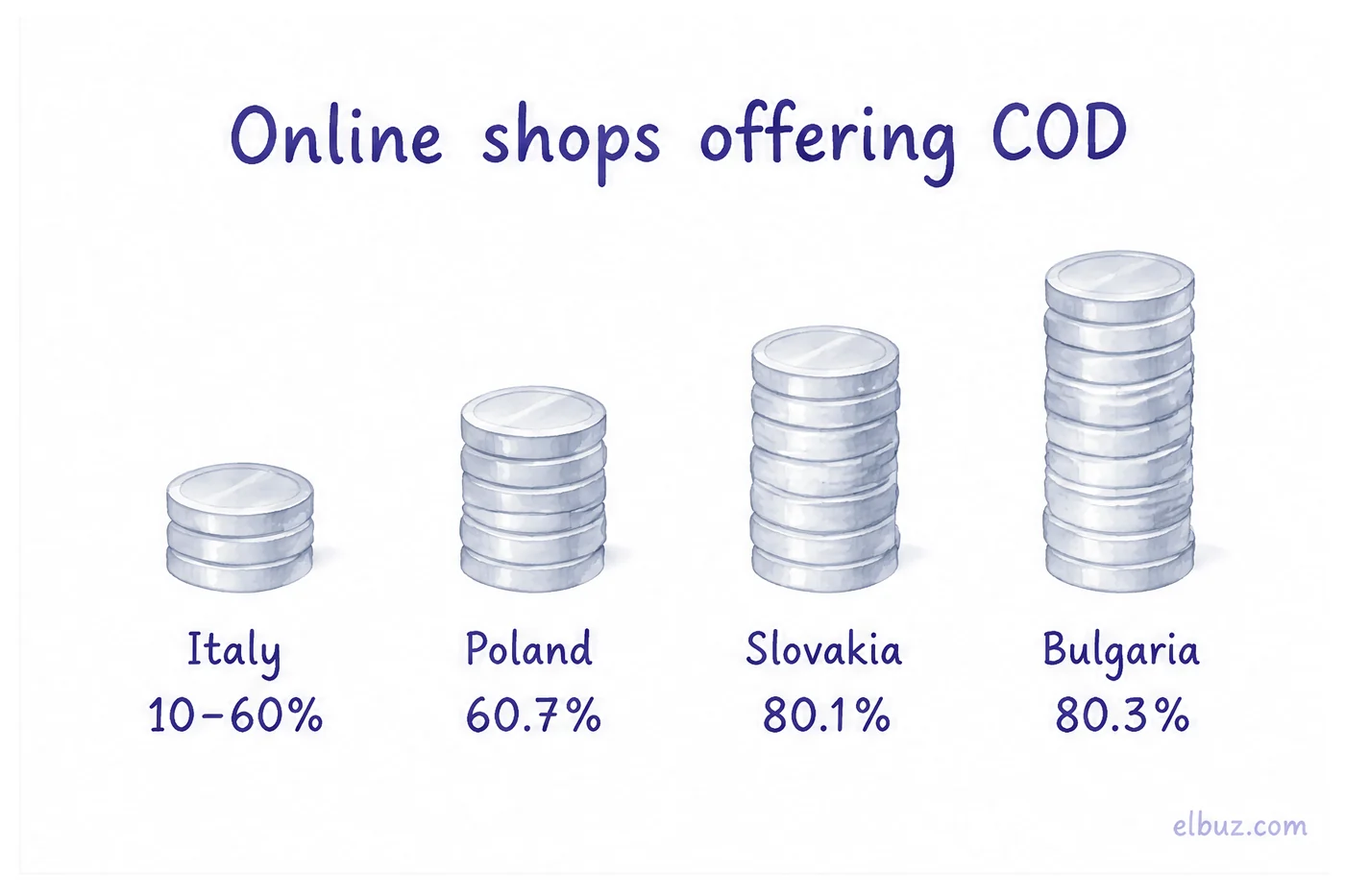
COD is most used in Central and Eastern Europe. DHL publishes the share of online shops that offer it in the countries where it sells its international COD service (data: ECDB, 2025):
| Country | Shops offering COD |
|---|---|
| Bulgaria | 80.3% |
| Slovakia | 80.1% |
| Poland | 60.7% |
| Czech Republic, Hungary, Romania, Slovenia, Spain | 60%+ |
| Austria, Croatia, Italy, Latvia | 10–60% |
Carrier fees depend on the country, the service and your contract, so check the current price list before you set COD prices. Two published examples: DHL Paket in Germany charges €3.60 plus VAT on top of the parcel price for international COD, with a maximum amount that depends on the destination country. GLS in Poland offers COD (CashService) for domestic parcels up to PLN 6,000 per shipment.
Who pays the fee is your decision: many stores add a COD surcharge at checkout, others absorb it in the price. If you charge it, show it before the buyer confirms the order.
When the seller gets the money
The seller gets the money only after the buyer has paid the courier, and then the carrier's payout period applies:
- DHL Paket International (from Germany) — usually within 10 working days of delivery.
- GLS Poland — up to 7 business days after delivery, with a list of the parcels included in each transfer.
So every COD order ties up its value for one to two weeks after delivery, plus the time in transit. In a growing store that gap needs working capital: you pay suppliers and shipping before the money comes back.
How much COD costs a store per month
The full cost of COD for a seller is the carrier's fee plus the refused parcels:
Monthly cost of COD = delivered orders × COD fee + refused parcels × (shipping to the buyer + shipping back).
Illustrative example for the arithmetic: the number of orders, the refusal rate and shipping prices are not market data or carrier rates. A store ships 200 COD orders a month with an average order of €50. The carrier charges €2 per delivered COD parcel. Buyers refuse or do not collect 20 parcels out of 200. Shipping costs €6 each way, and the store pays for returns.
| Item | Calculation | € |
|---|---|---|
| COD fees for delivered orders | 180 × 2 | 360 |
| Refused parcels | 20 × (6 + 6) | 240 |
| Total | 600 |
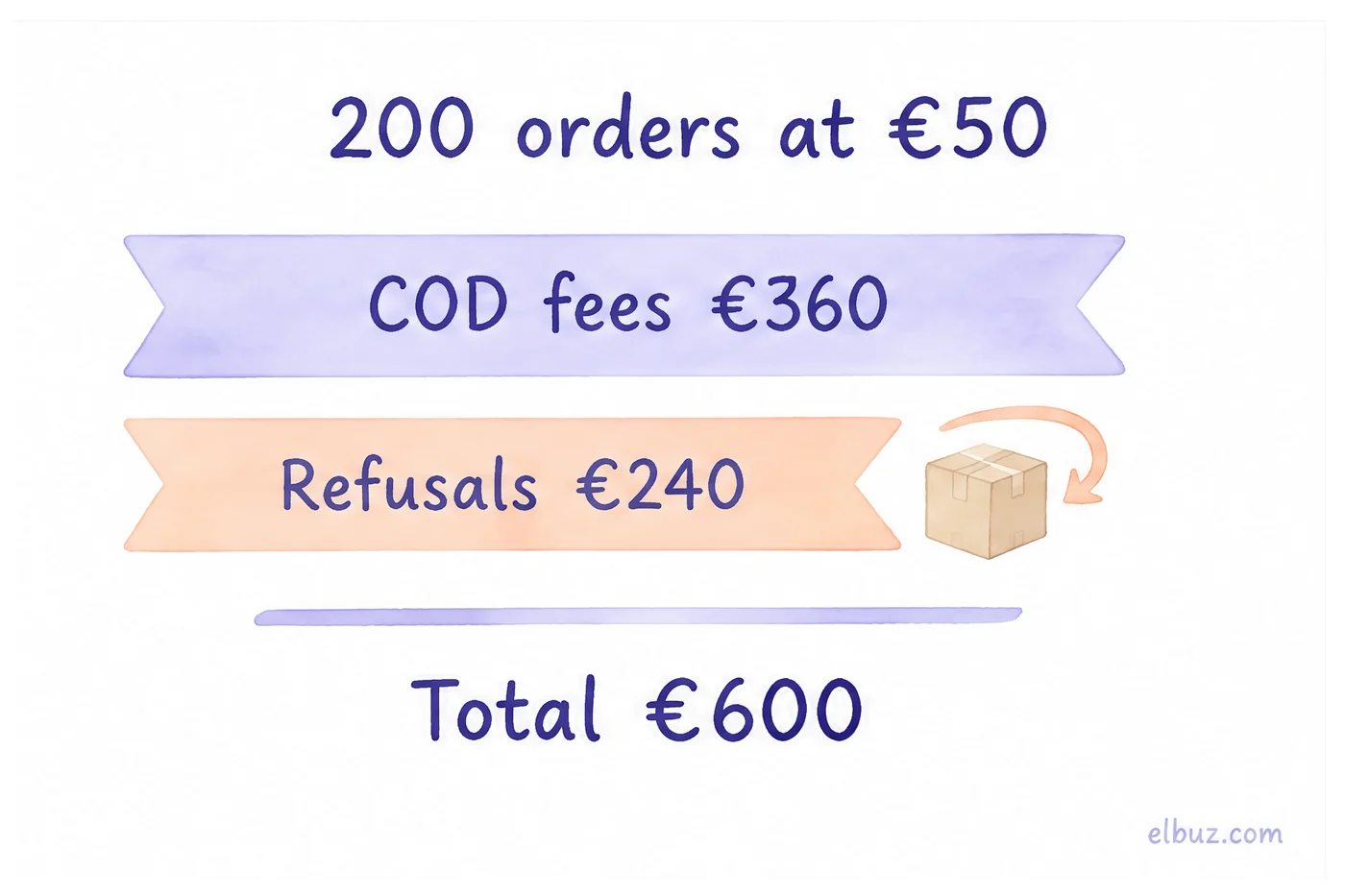
That is 6.7% of the €9,000 collected. Refusals are 40% of the cost here, and they are the part you can influence day to day: each refusal you prevent saves €12 in shipping and turns into a €50 sale. The fee changes only when you renegotiate the contract.
How to build these costs into the price — in how to calculate markup; how much of the margin is left after shipping and fees — in gross margin vs markup.
COD and the EU 14-day right of withdrawal
Paying on delivery does not change the buyer's rights: under the Consumer Rights Directive, a consumer who bought online can withdraw within 14 days of receiving the goods, without giving a reason. For a COD seller this is a second risk on top of refusals — the buyer pays, keeps the parcel for a week and sends it back.
- Refund deadline. Refund everything the buyer paid, including standard delivery, within 14 days of being told about the withdrawal. You may wait until the goods are back or the buyer shows proof of sending them.
- Return shipping. The buyer pays the direct cost of returning the goods only if you told them so before the purchase; otherwise it is on you.
- How to refund cash. The Directive requires the same means of payment unless the consumer expressly agrees to another one at no cost to them. For a COD order paid in cash, agree on a bank transfer and keep that agreement on record.
A COD order is therefore final only after the withdrawal period ends. Count both refusals and withdrawals when you calculate what COD costs you.
Pros and cons of cash on delivery
| For the buyer | For the seller | |
|---|---|---|
| Pros | No payment in advance; no card needed; no risk of paying a shop that never ships | More orders from first-time buyers who do not trust prepayment; once the courier has collected the money, the carrier pays it out |
| Cons | A COD surcharge, if the store charges one; cash ready at delivery | Refused parcels shipped both ways; money arrives one to two weeks after delivery; returns within 14 days are still possible |
Whether COD or card payment is cheaper for you depends on your refusal rate. The break-even formula and an example are in merchant acquiring: card or cash on delivery.
How to reduce COD refusals
Refusals drop with actions before shipping and while the parcel is on its way. Five that you can check within the first month:
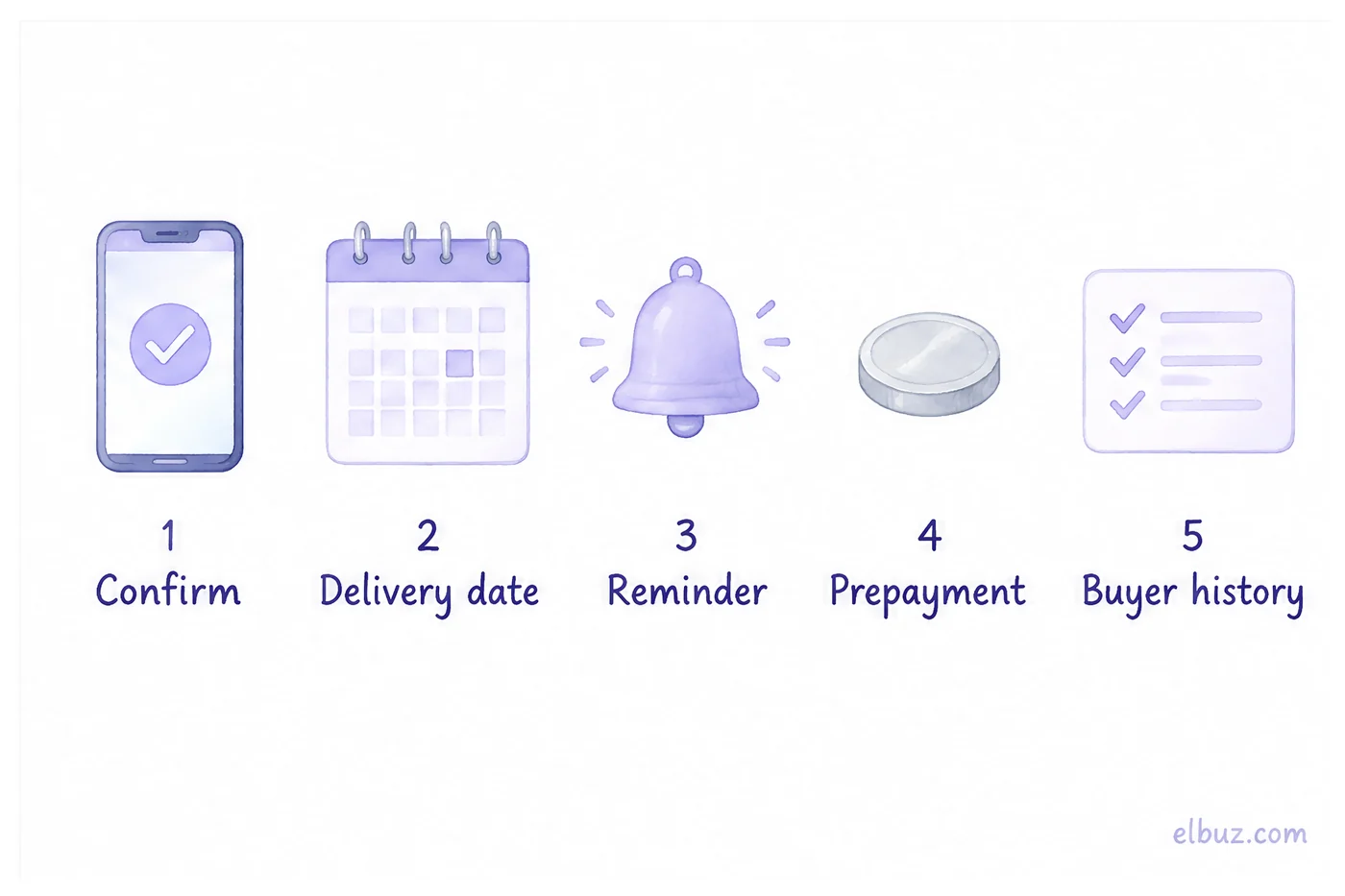
- Confirm the order. A call or message before shipping filters out accidental and duplicate orders before you pay for shipping.
- Give an honest delivery date. The longer the wait beyond what you promised, the more often the buyer has already bought elsewhere.
- Send reminders. Tell the buyer the parcel is on its way, the delivery day and the amount to have ready.
- Ask for partial prepayment. For expensive or bulky items, ask for a prepayment that covers shipping both ways — €12 in the example above. A refusal then no longer costs you money.
- Check the buyer's history. See whether this buyer collected previous COD parcels. Offer prepayment to someone who has refused two.
Dropping COD altogether is rarely the answer where buyers expect it: part of them will not prepay a new shop. Keep it next to card payment and switch to prepayment where a refusal costs the most.
When COD orders come in by the dozen every day
At dozens of shipments a day, nobody remembers which buyer already refused a parcel, and matching carrier payouts to orders by hand takes hours. In Elbuz, a cash-on-delivery order shows the buyer's track record right in the order card: how many of their earlier COD orders were not collected, with a prompt to ask for prepayment or confirm by phone. How orders, payments and shipments are kept in one place — on the order management page.
Elbuz does not replace your contract with the carrier: fees and COD payouts are set by the carrier, and Elbuz keeps the orders, their payment status and the shipments.
Orders and payments in ElbuzCOD orders, statuses and payments in one list, 14 days free
Frequently asked questions
What is COD in ecommerce?
It is a payment method where the buyer pays for an online order when the parcel is delivered, not at checkout. The courier collects the money and the carrier transfers it to the seller.
Is cash on delivery risky for the seller?
Yes, mainly because of refusals: a parcel the buyer does not accept travels back at your cost. The payment itself is safe once the courier has collected it — see the monthly cost calculation.
Who pays the cash on delivery fee?
The seller pays the carrier's COD fee under its contract. Whether the buyer covers it depends on the store: many add a COD surcharge at checkout and show it before the order is confirmed.
When does the seller receive COD money?
After the buyer has paid the courier, within the carrier's payout period: DHL Paket International usually pays within 10 working days of delivery, GLS Poland within 7 business days.
Which couriers offer cash on delivery in Europe?
Most national parcel carriers do, but the service depends on the country and route. DHL Paket offers international COD from Germany to selected countries, and GLS in Poland offers it for domestic parcels; check your carrier's current list of destinations.
Can a customer return a COD order in the EU?
Yes. Paying on delivery does not affect the 14-day right of withdrawal for online purchases; you refund within 14 days of being told and may wait until the goods are back.
Is cash on delivery or prepayment better?
For the seller, prepayment is cheaper because there are no refusals, but some buyers will not order without COD. Most stores keep both and ask for prepayment where a refusal is expensive — how to do it.
Sources
- DHL Paket, Cash on Delivery International — €3.60 plus VAT, payout within 10 working days, share of online shops offering COD by country (ECDB 2025) — dhl.de.
- GLS Poland, "Cash on delivery. How exactly does it work?" — card and BLIK payment, payout up to 7 business days, PLN 6,000 limit, domestic parcels only — gls-group.com.
- Directive 2011/83/EU on consumer rights, Articles 9, 13 and 14 — withdrawal period, refund deadline, return costs — eur-lex.europa.eu.
- Your Europe, "Returning goods" — who pays for returns, exceptions to the right of withdrawal — europa.eu.
Checked on October 31, 2026.


