

A good name for a cosmetics store is short, is spelled the same way by anyone who hears it, hints at your positioning, and is free: no similar trademark registered for cosmetics or retail, and the domain and social media handles are available. Come up with 20–30 options in five ways, score them against six criteria, and run the top three through five checks.
The most expensive mistake is not an "ugly" name but one you have to change after buying the domain, printing packaging and gaining followers, because it clashes with someone's trademark or customers cannot spell it. Below: ways to create a name, a scoring table, the checks with the databases where to run them, and typical mistakes.
When people look for a cosmetic store name
Usually the supplier is already found and the range is roughly clear; only the name is missing to register a domain and an Instagram account. People search for "cosmetic store names", "beauty business names", "unique cosmetic store names" and try name generators.
Most look for a ready list of "the best names". But a name from a public list has been seen by thousands of people, and the chance that it is still free is small. The more useful question is how to quickly drop the options that will not pass the checks.
Where to start: what your store sells
A name starts with one sentence: what you sell and to whom. "Skincare for sensitive skin", "Korean beauty for teenagers", "professional products for nail technicians": each sentence gives its own words for a name.
| Positioning | Where to take words from | What to avoid |
|---|---|---|
| Skincare | Skin, care, ritual, calm | Promises of results: "anti-aging", "wrinkle-free" |
| Korean or Japanese beauty | Images of the country, the sound of the language | Names of real brands and their product lines |
| Natural cosmetics | Plants, herbs, water, earth | Words that sound like a certification, such as "organic" or "eco", if the products are not certified |
| Professional, for technicians | Tool, studio, salon, pro | Words too cute to be taken seriously |
| Mass market, wide range | Neutral words, an invented word | Ties to one category: "Lipstick", "Cream" |
Five ways to come up with a name
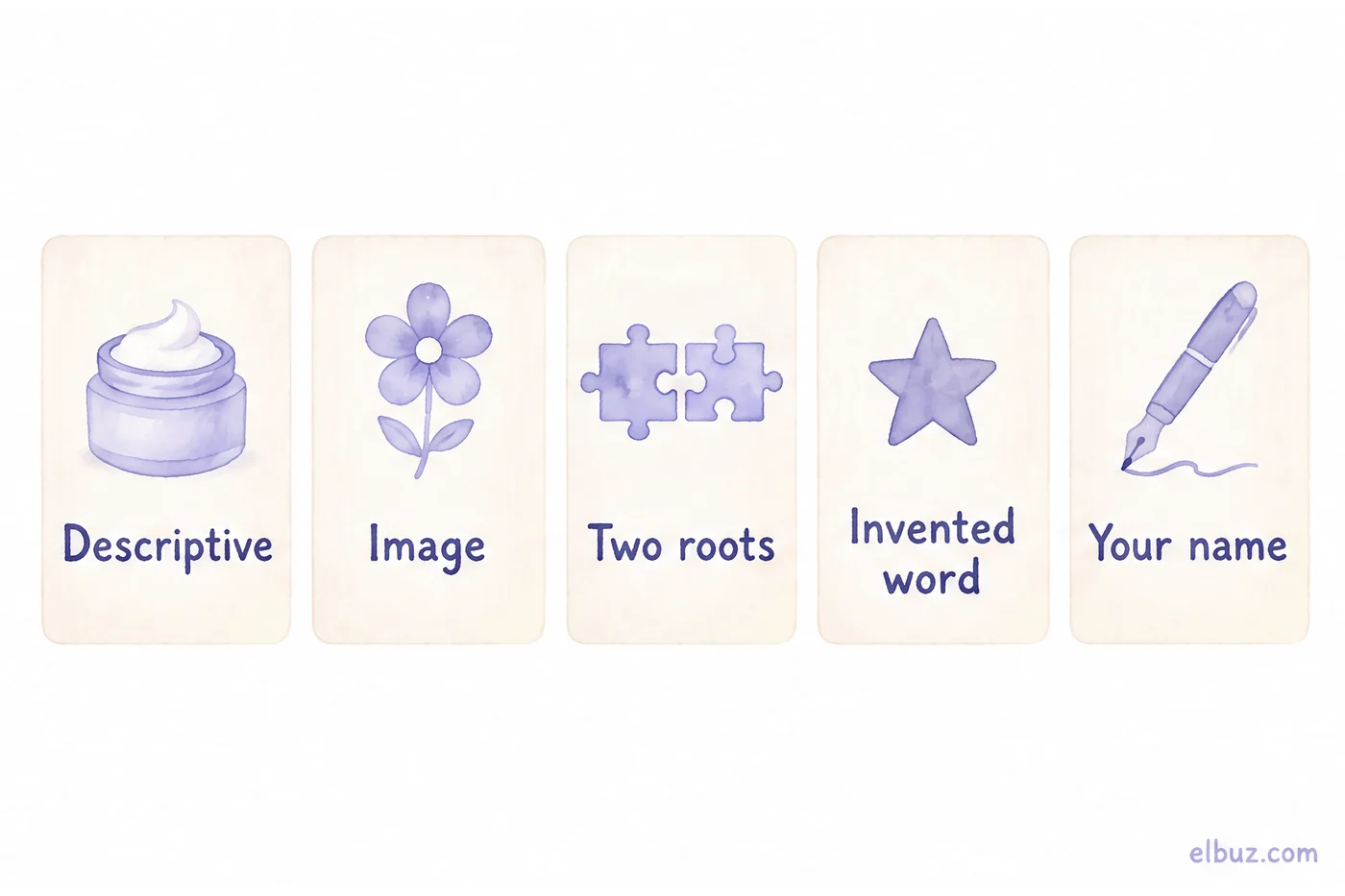
Ideas come faster when you write options for each method separately instead of waiting for inspiration. Half an hour gives 20–30 options, which is enough to choose from.
| Method | How it works | Upside | Downside |
|---|---|---|---|
| Descriptive | A word about the product or care + a qualifier | Clear what you sell; helps in search | Many similar names, hard to register as a trademark |
| Image | An associated word: a plant, a natural phenomenon, a feeling | Easy to remember, sets a mood | Popular images are taken |
| Two roots | Two words blended into one | Unique, the domain is more often free | Can be hard to read |
| Invented word | A new word that sounds pleasant | Easiest to register and to find a free domain | Says nothing about the product, needs a tagline |
| Your name | Your first name, surname or a pseudonym | A personal brand, trust in a person | Hard to sell the store later; the name may match someone's trademark |
Name generators are useful as one more source of ideas, not as the answer: they combine words by a template, and other people get the same results. Take roots and syllables from them, not a finished name.
How to choose from 20 options: a six-criteria score
Give each option 0, 1 or 2 points on six criteria. The maximum is 12. Only the three options with the highest totals go on to the checks.
| Criterion | 2 points | 0 points |
|---|---|---|
| Length | One or two words, readable at first glance | Three words or more |
| Spelling by ear | Heard once, written correctly | Several ways to write it |
| Works in your markets | Reads and sounds fine in the languages of the countries you sell to | Hard to pronounce or means something awkward in one of them |
| Room to grow | Still fits when you add new categories | Tied to one product |
| Link to positioning | Hints at your format | Could be the name of anything |
| Distinctiveness | Not similar to known stores and brands | Easy to confuse with a famous name |
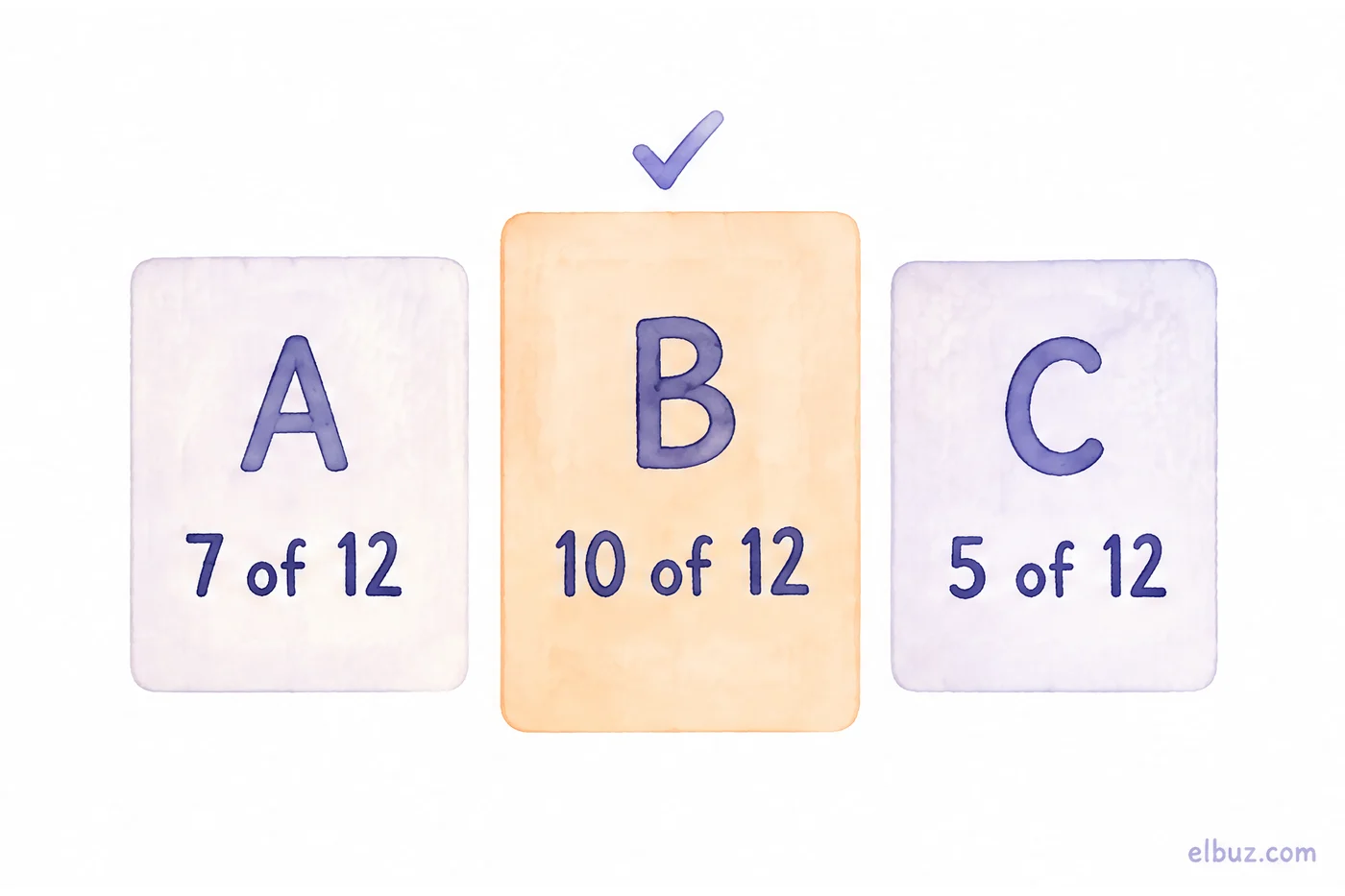
Illustrative example: option A is a two-word descriptive name (7 of 12: simple, but similar to dozens of others), option B blends two roots (10 of 12), option C is an invented word people spell three ways (5 of 12). Check option B first.
Five checks before you buy the domain
The name is ready when it passes all five checks. Run them in this order: the first one rules out the most.
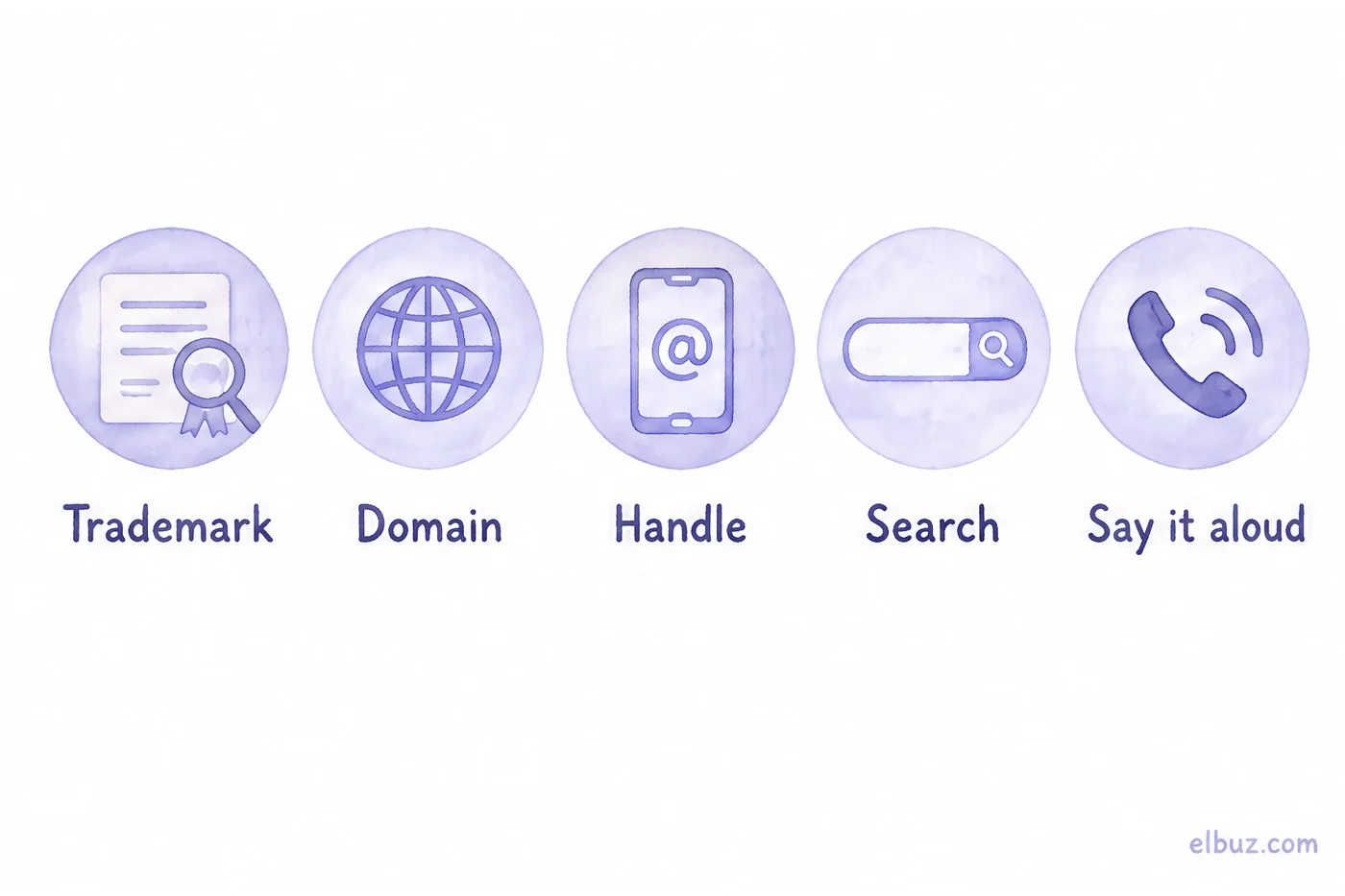
- Trademark. Search the name and similar spellings in the trademark databases of your markets: USPTO Trademark Search for the United States, TMview for the EU (EU trademarks from EUIPO and the national offices of member states in one search). For a cosmetics store, look at class 3 of the Nice Classification (cosmetics and perfumery) and class 35 (which includes retail services). A match or a very similar mark in these classes means the name goes on hold.
- Domain. Check free addresses in the extensions you plan to use: .com and the country domains of your markets. If .com is taken by an active business with a similar name, that is also a trademark risk, not just an inconvenience.
- Handle. Check the same handle on Instagram, TikTok, Facebook and Pinterest. If it is taken on one network and free on others, customers will write to the wrong account.
- Search. Type the name into Google and marketplaces such as Amazon. If the results are full of another store, brand or salon with that name, it will be hard to rank above it even for your own name.
- Say it aloud. Say the name over the phone to five people and ask them to write it down. If two of them spell it differently, customers will not find you after a recommendation.
Buy the domain and register the handles on the same day the name passes the checks. A name that is free today may be taken tomorrow.
Mistakes that force a name change
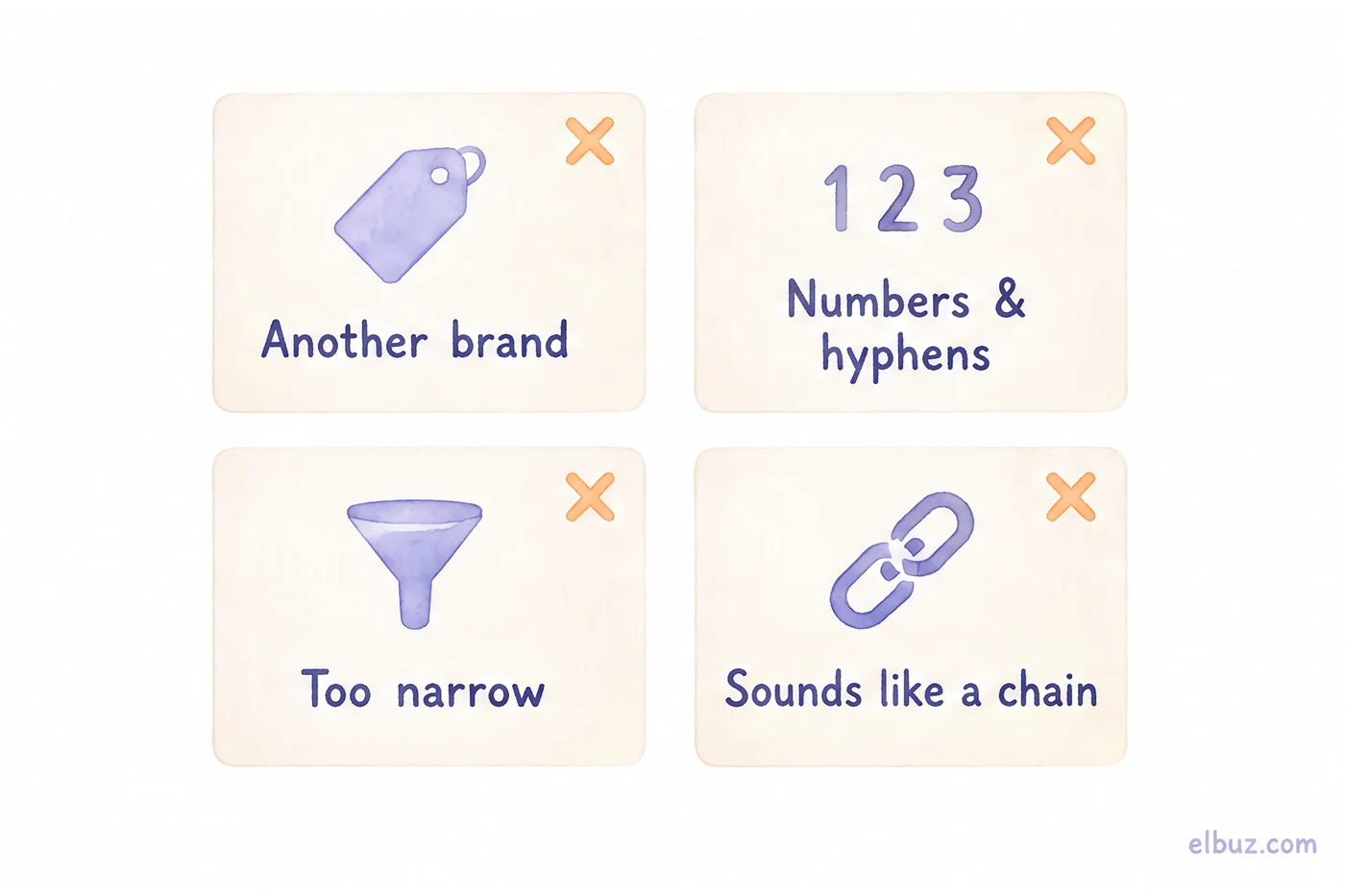
- Another brand's name in yours. The name of a brand you sell is someone else's trademark. The owner can demand a rename, and you cannot add other brands without confusion.
- Numbers and hyphens. You cannot hear them when the name is spoken: "beauty one two" can be written five ways.
- Too narrow. A name with "lash" or "nail" in it gets in the way when you add hair care or accessories.
- Sounds like a chain. A name close to a big beauty retailer seems clever at first, then brings legal letters and customers who were looking for someone else.
Should you register the name as a trademark?
Register it if you plan to invest in the name: packaging, advertising, your own product line. A registration protects the name against copies and gives you a stronger position in disputes over domains and marketplace listings. In the United States you file with the USPTO; for the whole EU, an EU trade mark is filed with EUIPO, or you file nationally in the countries you sell to.
File before you spend on advertising: registration takes time, and a database search shows only marks and applications that already exist. A cosmetics store usually picks classes 3 and 35; agree on the exact list of goods and services with a trademark attorney.
What next: a store under the new name
Once the name, domain and handles are secured, the next steps are the range, suppliers and the website. Which platform to build the store on, and what it costs per year, is covered in the article on types of CMS; if you plan to launch with a giveaway, read how to run an Instagram giveaway first.
You can build the site on your own domain with Elbuz CMS: products, prices and stock come in from supplier price lists, and website orders go straight into Elbuz. If you start with a few dozen products, a ready website builder is enough.
Frequently asked questions
How do I name my beauty business?
Write one sentence about what you sell and to whom, come up with 20–30 options in five ways, score them on six criteria and check the top three: trademark, domain, handle, search and the say-it-aloud test.
How do I check if a store name is available?
Search the name and similar spellings in USPTO Trademark Search or TMview in classes 3 and 35, check the domain and social media handles, and type the name into Google and marketplaces.
Do I have to trademark my store name?
No, you can trade without one. But without a registration it is harder to protect the name against copies and to win disputes over domains and listings.
Can I use a brand name in my store name?
Not without the owner's permission: it is someone else's trademark, and the owner can demand a rename. Use your own name and keep brands in the range.
Can I use a name from a business name generator?
As a source of ideas, yes; as a finished name, better not: the generator gives the same options to other people. Take roots and syllables from it and run the result through the same five checks.
Should the name be in English?
If you sell in several countries, choose a name that reads and sounds fine in all their languages. Test it with people from each market: the winner is the one they all spell the same way.
Sources
- USPTO, Trademark Search — tmsearch.uspto.gov.
- TMview (European trade mark and design network): trademarks of EUIPO and national offices — tmdn.org/tmview.
- WIPO, Nice Classification, class 3 and class 35 — nclpub.wipo.int.
Checked on October 31, 2026.


