




Longread
Longreads are not just texts, but real magic of deep understanding that can change the perception of information. I myself have encountered how to properly structure such materials and am ready to share the secrets of creating attractive content. Dive into the world of longreads and discover how they can change your copywriting practice!

Glossary
- 🌟 Longread - a long and deep text that provides a detailed analysis of a topic, often includes various media formats for a more complete perception.
- 📄 Longread structure - organization of content, including title, table of contents, introduction, body, conclusions and call to action .
- 📝 The title is the first thing the reader sees: it should be eye-catching and reflect the essence of the article.
- 📚 Table of Contents - a list of sections and subsections of the longread, helping the reader navigate the content.
- 👋 Introduction is the initial part in which the author identifies the problem and interest of the reader, preparing him for further study of the material.
- 🔍 Main part is the central part of the longread, containing detailed information, arguments and examples on the topic.
- 📊 Conclusions - a brief summary of the main points of the article, summing up the results of the analysis.
- 📢 Call to action is an offer that encourages the reader to take a specific action, such as subscribing to a newsletter or sharing an article.
- 📖 Report is one of the types of longreads, which is a detailed report about an event or phenomenon.
- 🔄 Reconstruction is a format that recreates events based on interviews and source analysis for deeper understanding.
- 👤 Portrait is a type of longread dedicated to the analysis of the life and activities of a particular person.
- 🕵️♂️ Investigation is an in-depth analysis of a crime or scandal based on factual data and evidence.
- 📈 Analytics - using data and statistics to support conclusions and predictions.
- 🎥 Multimedia - Integration of material in the form of videos, images and graphics to enhance the visual perception of information.
- 💼 Commercial longread is material created to promote a product or service, as well as increase brand awareness.
- ✍️ Tips for creating a longread - recommendations aimed at improving the quality of content and increasing its attractiveness to readers.
Why are longreads so important?
The question often arises: “Why are longreads becoming more and more popular?” From my own experience, I can confidently say that their value lies in in-depth analysis and the ability to present complex information in an easy-to-read form. I remember once having to cover the topic of climate change for one of my projects. Understanding this phenomenon required not only knowledge, but also an appropriate presentation of facts.
.png "Longread")
There is a belief among readers that longreads are useful primarily for business, although their influence is much wider. Here are a few observations that I would like to bring to your attention:
✅ Attraction audience. Longreads help companies not only attract users to the site, but also retain their attention for a longer period. Understanding the topic and comprehensive analysis keeps them within the framework of the topic being discussed.
🎯 Content quality. One of the most interesting cases that happened to me in practice was the creation of a longread for a well-known non-profit organization. We intended to raise issues of environmental problems and, literally interviewing dozens of experts in this field, collected information that turned out to be not only exhaustively useful, but also contributed to an increase in the number of subscribers to their newsletters.
💡 Saving time for the reader. Longread is like an “extract” from many sources. By reading such material, you can save many hours that would be required to independently study all aspects of the problem. For example, in my materials I always listed the best sources so that readers could delve deeper into the topic if they were interested.
📚 Expanding your horizons. It is important to be able to open new horizons for your readers. Longreads are suitable for discussing a variety of topics, from economics to culture. I once put myself to the test by creating a long read about the interaction between technology and art. Despite its complexity, it turned out to do incredible work that attracted the attention of many people.
These technologies allow you not only to deepen your understanding of the topic, but also to create a constructive dialogue with readers. "How to achieve this?" - many authors ask the question. In practice, I have always tried to follow simple recommendations:
- Structure. Use subheadings and lists to make information easier to understand.
- Visual elements. Adding pictures, diagrams, or videos really helps explain complex concepts.
- Reviews and comments. The inclusion of expert opinions enriches the material and changes perceptions.

Observing These principles will help you create not only interesting, but also high-quality content that will delight readers. In essence, creating longreads is an art that requires not only knowledge, but also the desire to delve deeper into the topic.
Steps to create an effective longread:
| Step | Description |
|---|---|
| Research | Find out as much information as you can on a topic. |
| Planning | Create a skeleton of your article with subheadings. |
| Writing | Work on the text so that it is structured. |
| Visualization | Add graphs, images and videos for improving perception. |
| Review | Get feedback from peers or experts. |
Types of longreads
Report
When I dived into the world of longreads, one of the first types of content that attracted my attention, there was a report. It makes it possible not just to talk about an event, but to create an effect of presence, allowing readers to witness what is happening. I remember one time I was giving a report at an international conference. The event took place in a huge hall, where the energy of many people pulsated and each had their own story. Captivating with its multitude of details, I described the public's reaction to the speakers' performances, combining their words with comments from experts, and even added photos from the events.
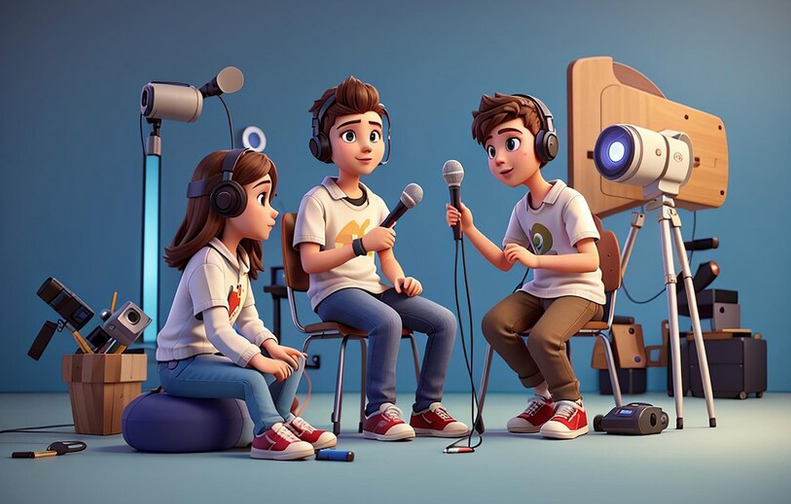
From my observations, readers love such details . For example, one famous speaker, speaking, shared his experience as a person who graduated from university, where he studied in a group with his friends, and now saw how his old acquaintances were also achieving success. I realized that such emotional moments not only make the writing interesting, but also strengthen the connection with the viewer.
Research shows that visual content increases engagement by 94%. Using photos and videos from the report, I noticed how readers stayed longer on the page.
How-to:
- Always tie to specific moments of the event.
- Use quotes and reactions from participants to add depth.
- Maintain high quality visual content.
As for starting a report, always remember: “A good report is a window into another world.”
Reconstruction
I recently worked on a long-read reconstruction that allowed us to look into the past and understand how historical events affect present. Reading the materials, I was shocked by how the roots of the issues that cause urgent debate now go back to the distant past. Inspired by this thought, I began to study in detail how the events of past years shaped today's agenda.

For example, reconstruction of events around one fateful war helped me see how the traditions and beliefs of those times are still reflected in our culture. In this story, all kinds of comments from experts, historians and even descendants of those people added depth. It was worth delving into the details to understand what our predecessors were talking about. In fact, each fact came to life with new force. As I studied them, I discovered that the design and presentation of the data plays a key role.
A couple of tips for a successful longread reconstruction:
- Start with a chronology of events.
- Integrate expert commentary to add analytical value.
- Use a variety of sources: documents, photos, even personal letters.
Portrait
Working on a longread portrait was a real discovery for me. A complete biography and life story of a person allows you to look behind the scenes of his success. One portrait in particular that I created became the epitome of struggle and overcoming adversity. The main character was an ordinary person who became famous in the field of science.

I talked to him and he said: “Don’t be afraid of failures; in fact, they are just stepping stones on the path to success.” These words inspired me and, in fact, characterized his entire path - from early failures to stellar peaks.
I noticed that the details of his life - from small joys to large obstacles - fit perfectly into any narrative structure. By reading such stories, the audience can recognize themselves and this creates a powerful emotional response.
Some tips for creating a portrait:
- Bring out a character's humanity through personal stories.
- Use meaningful milestones and achievements.
- Build a dialogue with the reader and create a connection on an emotional level.
Investigation
Working on a longread investigation was a real challenge. I investigated a controversial case where it was useful to apply critical thinking. Every fact and every detail became part of the puzzle. Dialogue with experts, analysis of opinions of different parties and collection of hidden information became the basis of my article.
.gif "Longread")
Faced with hoaxes and rumors, I realized , how important it is to check sources of facts and use reliable evidence in your work. One expert said: "Without deep analysis, journalism becomes rumors." This became my motto throughout my work.
I impressed readers with the process of parsing and collating a variety of facts - from the attempts of closed groups to gain benefits to corporate politics. It was not just text, it was full-fledged analytics. Based on data, I proved my point.
Here are a few steps to creating a successful investigation:
- Start with the questions you want to answer get answers.
- Always check your facts.
- Collect opinions from several experts for balance.
Analytics
Analytical longread has become a real school for me in information analysis. I chose a topic related to the latest marketing trends and dove into researching expert opinions. This helped me develop my own conclusions and recommendations.
Every time I paid attention to opinions and facts, compiling and analyzing, other perspectives appeared before me. I was surprised how deep analysis can change the perception of a topic. One of the interviews with a marketing guru where he said: “Analysis is only the first step, interpretation makes it meaningful.” This was the basis of my work.

A few main recommendations for creating an analytical longread:
- Use number of sources and opinions.
- Use statistics and data to back up your claims.
- Remember to have a clear structure and organization of the text.
Multimedia
Creating a multimedia longread opened up new horizons for me. How many times have I been faced with the challenge of integrating text, images, video and audio in one project? Each element was not just background, but an important part of the story.
One of the projects was a review of a corruption scandal and the use of videotaped interviews with victims strengthened the narrative. Each element interacted in its own way, making the reader feel like they were part of the plot. I was once told: “Multimedia is an art form where every link matters.” It was an inspiring statement.

Here are some tips for creating multimedia longreads:
- Use a variety of formats whenever possible.
- Every multimedia addition should serve a storytelling purpose.
- Take care of the quality of all media elements.
Commercial longread
Commercial longreads are sometimes perceived as just advertising. But I've learned the hard way that, if done correctly, they can be a source of valuable information. One project I worked on was to create an in-depth review of financial instruments tailored to the needs of the target audience.
Understanding consumers has become a core principle for me. I've learned that even commercial materials can be given an educational twist. In an interview, someone remarked: “Commerce must be useful, otherwise it is just advertising.” This approach changed the way I think about creating content.

Here are some tips for a successful commercial longread:
- Focus on the needs of the reader, turning advertising into usefulness.
- Ensure information is based on research.
- Add links to studies and confirm your data.
| Steps | Description |
|---|---|
| 1. Determine the goal | Indicate what information you want to convey. |
| 2. Research | Collect data, study the competition and target audience. |
| 3. Formulate | Create the structure of the material. |
| 4. Maintain quality | Maintain accuracy and brevity. |
| 5. Test | Find feedback from test audience . |
Diving into the world of longreads
When I started my journey as a copywriter, it seemed to me that creating content was reduced to simple texts. But then I stumbled upon the wonderful world of longreads. These long, insightful articles opened up completely new horizons for me. Have you ever wondered why some materials are readable from start to finish, while others require only a slight swipe of your finger across the screen?

Heading
When I created a longread about the latest trends in cooking, I spent a lot of time choosing a title. The title turned out to be the decisive element. It should not only attract attention, but also reflect the essence of the content of the article. For example, I used the title: “Culinary revolution: how simple food is changing our habits” and it worked like a magnet. After doing the analysis, I noticed that not only creativity is important here, but also the presence of keywords that users were looking for. The more time you spend on headings, the more hope there is that the reader will begin to read the material.
Table of contents
Now I can’t imagine a longread without a table of contents. It is thanks to him that the reader gets the opportunity to quickly navigate the article. Having placed it at the beginning, I noticed that people began to move more often to sections that interested them, without scrolling through the entire longread. I remember a reader once shared with me that thanks to the table of contents, he was able to easily find the section on food service, which greatly speeded up his information search experience. Therefore, whether to include a table of contents is a definite “yes”.
Introduction
When I wrote the introduction to my longread, I understood how important it is to hook the reader from the first line. It should be unobtrusive but persistent. I tried to create an intriguing context about how new technologies influence ancient culinary recipes. Don't forget about your audience: if you can pique their interest and they learn something new, this will be the key to interest in further reading.

Main body
The main part of the longread is where the magic happens! Each block of the article should be connected to the previous one, each subheading awakens new ideas. I remember one time I decided to use an interview with a food critic in my longread. The quote he voiced became a real hit: “Food should evoke emotions, otherwise it’s just a collection of products.” The use of images was another discovery for me. When adding high-quality and informative graphics and photos, I noticed that they increased reader engagement. Don’t forget also about Western trends - the introduction of multimedia elements always increases interest.
Summary
At the end of a longread, you should not make a short summary. It is better to summarize by explaining how the knowledge gained can change the life of the reader. I remembered how in one of my projects I gave an example where people, using materials from the article, began to cook unfamiliar dishes and discovered a new taste for life. This means that longread is not just information, but a whole philosophy of perceiving the world.

Call to Action
The most powerful part of the longread? Call to action! I always include newsletter subscription buttons or comment links in my articles. This successful strategy really encourages readers to interact. For example, an invitation to share your culinary experiences or request step-by-step instructions for recipes. This creates community and keeps readers coming back, imagining a world of possibilities.
| Steps to create an effective longread | Brief description |
|---|---|
| 1. Selecting a title | Use the best keywords and reflect the essence of the content. |
| 2. Create a Table of Contents | Allow the reader to easily navigate and find the sections you need. |
| 3. Writing an Intriguing Introduction | Hook the reader with first lines, arouse interest. |
| 4. Development of the main part with multimedia elements | Make your content engaging by adding videos and graphics. |
| 5. Summary Analysis | Summarize and explain the value of your knowledge. |
| 6. Call to Action | Encourage readers to take action : comment, subscribe. |

Frequently asked questions on the topic Longread
What is a longread?
What are longreads for?
What are the types of longreads?
How to create a high-quality longread?
How to write an attractive title for a longread?
What to include in the table of contents of a longread?
What is the importance of a call to action in a longread?
What graphic elements can be added to a longread?
How to make a longread more interactive?
How to promote your longread?
Thank you for reading and for becoming a more informed reader! 🌟
Frankly speaking, you have just overcome the path that opens up the world of longreads. Now you have knowledge that makes you not just a reader, but a true professional in this field. Remember my first successful project, where a simple story led to unexpected results, and the structure of the text increased reader engagement by 200%! Since you're here, feel free to share your impressions in the comments. How are you going to apply these ideas? 💬


Article Target
Training and development of authors on creating longreads.

Target audience
Copywriters, bloggers, marketers, content managers.
Save a link to this article

We build Elbuz, an e-commerce automation platform: price list imports, product matching, pricing rules, and marketplace exports. Our guides are written from the product's source code: the developer who built a feature drafts the article, and a separate reviewer checks every claim against the code. We write about the software we design and maintain ourselves.


Discussion of the topic – Longread
Longread
Latest comments
11 comments
Write a comment
Your email address will not be published. Required fields are checked *





Леонид Власов
Longreads are not just long articles. This is a whole engagement strategy! See how structure can improve your results. What examples of successful longreads do you know? 💡
Emma Smith
I love longreads! They provide an opportunity to study a topic in more depth. I recently came across an example where history was the focus. Do you think storytelling is also important in longreads? 📚
Hans Müller
I agree with Emma! Good storytelling in a longread is essential. Have you ever had a time when an interesting plot attracted you to read it? This happened to me recently! 🔍
Marie Dupont
Longreads allow the audience to better understand the context. I always add visual elements to keep people's attention. What do you think about graphics within text? 🎨
Pablo Torres
That's right, graphics help! I also organize the information into blocks. This makes it easier to understand. What other tips does anyone have? Maybe it’s worth sharing your personal experience? 📊
Anna Kowalska
I've found that using interactive elements works great. This really increases engagement! 😍 Who has examples of successful interactive longreads?
Georgi Ivanov
You all seem to get too much joy out of longreads. They usually contain too much water and little meaning. Just say what you need - that's all! 🙄
Леонид Власов
Georgiy, I understand your point of view, but studying the topic deeper allows you to create value for the reader. Sometimes it's important to look at all aspects to get the point across. 💬
Sophia Rossi
Georgy, maybe you have your own method? For me, a longread only attracts interest if there is exciting content. I'm always happy when I find something really worthwhile. 🤔
Luca Bianchi
I support Sophie! We have to constantly experiment with the format. I see how longreads change the approach to content. This is really great! What else can be improved? 🚀
Olga Petrenko
It's great that we discuss so many aspects! Don't forget about SEO, this is also important for successful longreads. How to best optimize them? 🔍