

In winter, stores sell what people search for in the cold months: space heaters, heated blankets, hand warmers, snow shovels, Christmas decorations and gifts. Which of these suits you is decided not by a list but by three checks: when demand actually rises (Google Trends), how people search for the product on marketplaces, and whether you can get stock in before the season starts. Begin with a small test batch and reorder based on how fast it sells.
Winter products fail not because of a bad niche but because of timing. Christmas lights that arrive in mid-December are too late to sell, and a space heater bought in bulk sits in the warehouse until next autumn. Below: real US demand curves for winter products, a formula for the order date, a test batch and a reorder calculation on illustrative numbers.
When people ask what to sell in winter
Usually in autumn: summer sales at a store or on a marketplace have dropped, and the seller wants to add something for winter. They search for "what to sell in winter", then "winter products to sell" and "best selling winter products".
A "top 10 winter products" list does not answer this: it is the same for everyone who read it. The more useful question is when exactly demand for a product rises and whether you can be ready by then.
When people search for winter products: Google Trends data
Winter demand does not start in December: in the US, searches for space heaters and heated blankets grow from October, hand warmers and snow shovels from November. It ends differently too: Christmas lights almost vanish from search after the holidays, space heaters are searched until February.
We compared US search interest in five cold-weather products over three seasons, October 2023 to October 2026, on one Google Trends chart. The index is relative: 100 is the highest week among all five terms; the table shows monthly averages.
| Search term | Starts rising | Peak | Falls |
|---|---|---|---|
| space heater | October | January: 22, 26, 28 over three seasons | in March |
| heated blanket | October | December: 11, 14, 18 | in February |
| hand warmers | October–November | December: 6, 9, 10 | in February |
| snow shovel | November, with the snow | January: 16, 15, 38 | in February–March |
| long underwear | barely seasonal | 2–4 all winter | — |
Christmas lights were compared separately, because their volume dwarfs everything else: in the same years the index is about 9 in October, 51–63 in November, 71–75 in December and falls to 3–4 in January.
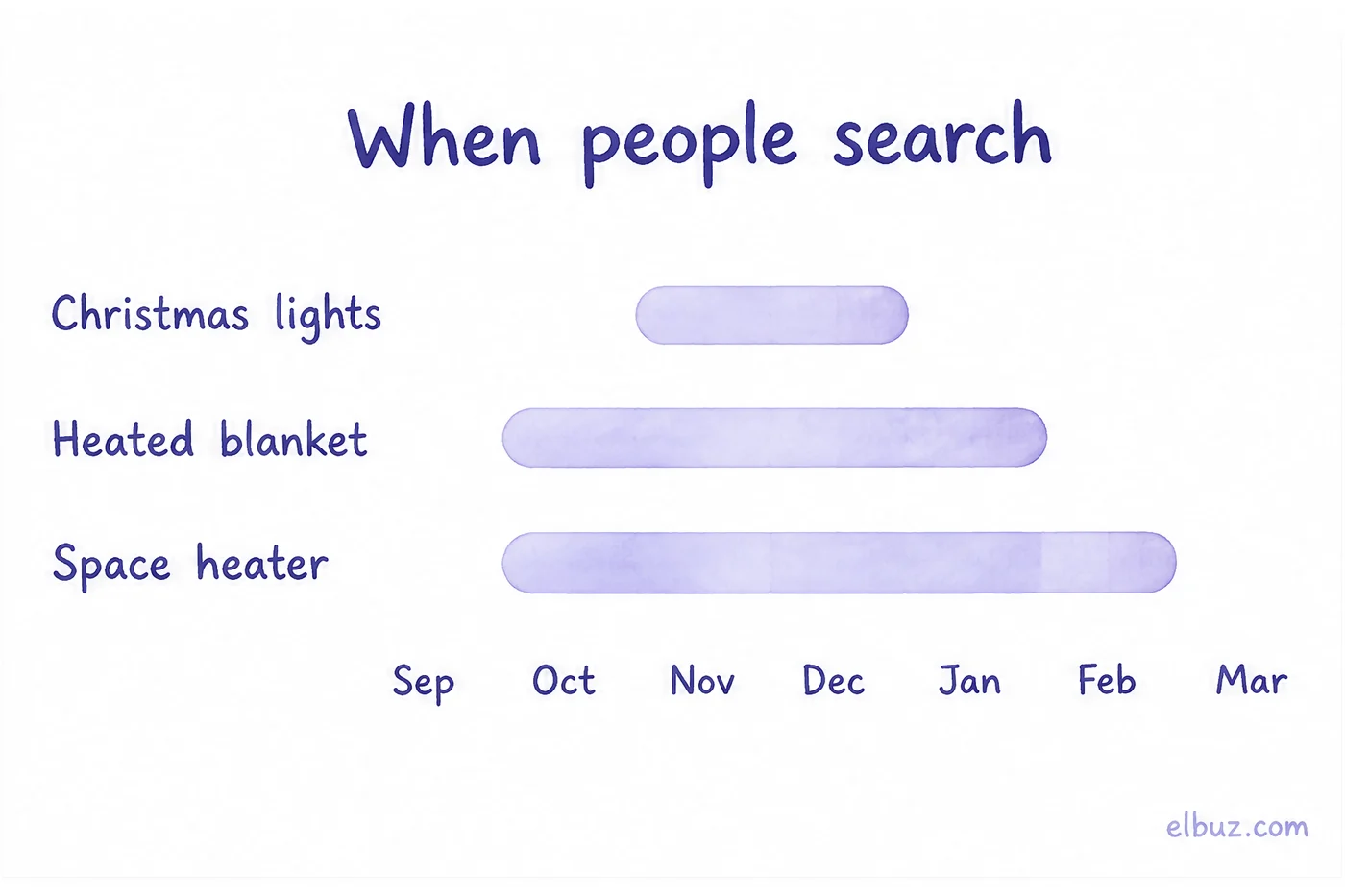
What this shows:
- The season is short and shifted towards autumn. For Christmas lights, the selling window is seven or eight weeks before the holidays. Listing them in mid-December misses most of the season.
- Season strength changes from year to year. Snow shovels depend on snow: in January 2026 interest was more than twice as high as in the two previous Januaries. Buying such a product for the whole season based on last year's sales is risky.
How to check your own winter product
Check demand for your product the same way: Google Trends shows when people search for it, marketplace suggestions show how.
- Google Trends. Set your country and a 5-year period to see several seasons. Compare 3–5 candidates on one chart and note for each the month demand starts, peaks and falls.
- Marketplace search. Start typing the product name in the search bar of Amazon or another marketplace you sell on: the suggestions show which variants people look for (size, power, who it is for).
- Margin after fees and returns. Winter clothing and shoes come back for size reasons more often, and a large heater costs more to ship. Calculate what one sale leaves you.
How to read a Trends chart, judge competition and calculate margin after marketplace fees is covered in the article on what to sell on marketplaces: five category checks. A seasonal product goes through the same checks plus one of its own: timing.
When to order winter stock
Order so that the product is listed, with product pages and ads ready, before demand starts to grow:
Order date = demand start − supplier lead time − time for listings and ads.
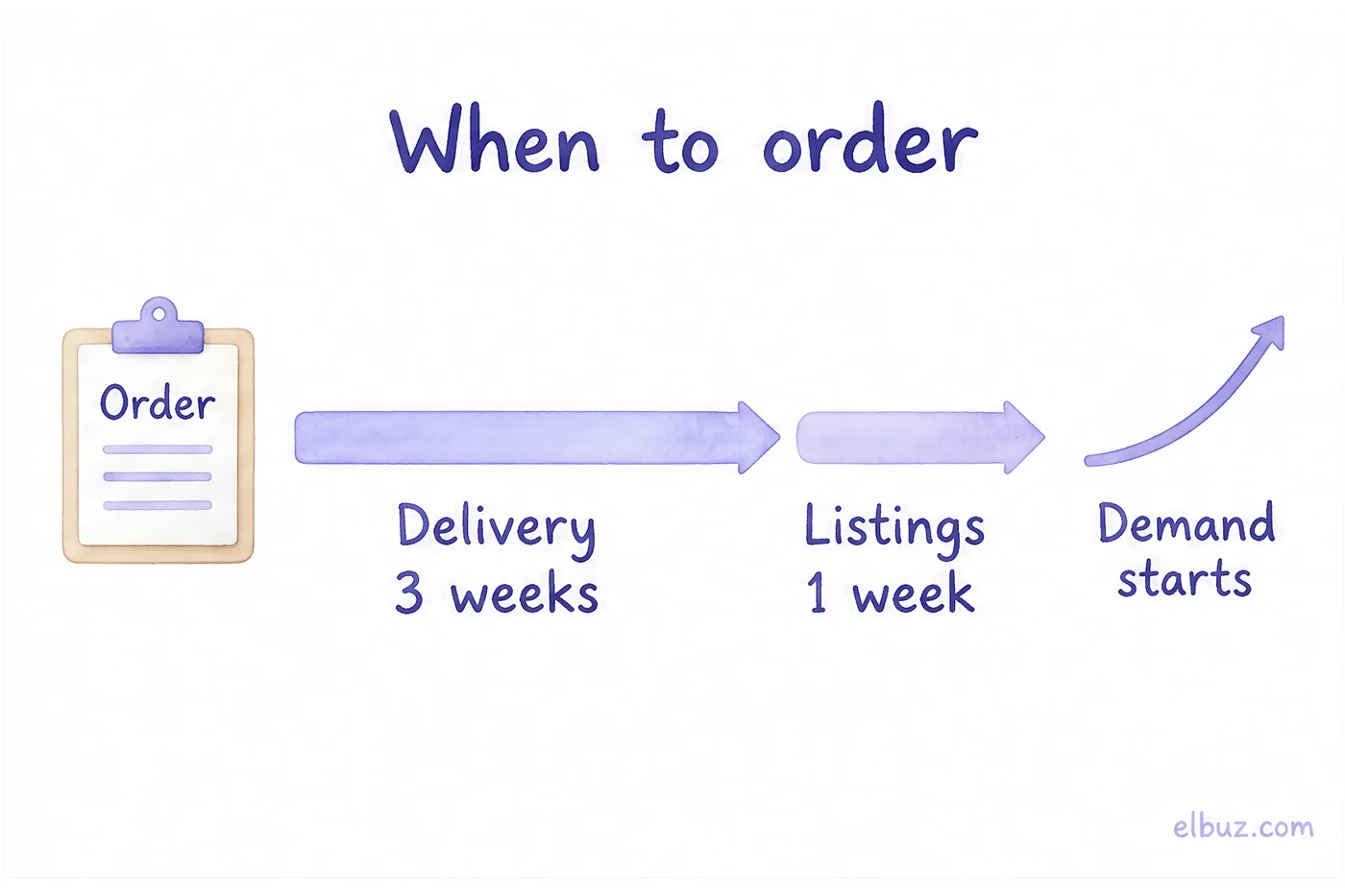
Illustrative example for the arithmetic; the lead times are not a specific supplier's. Heated blankets start being searched in October; take October 1. The supplier delivers in 3 weeks, and photos, listings and ads need another week. Order no later than September 3: October 1 − 3 weeks − 1 week.
For Christmas lights demand starts in November, for snow shovels with the first snow, so the order dates move later accordingly. If the date has already passed, you can still catch the season with stock that a supplier holds in a local warehouse and ships within a few days.
How much to buy: a test batch and the reorder
In the first season, take a small test batch and reorder based on the sales rate: reorder = sales per week × weeks left in the season − stock on hand.
Illustrative example for the arithmetic; the numbers are not market data. You took 10 heated blankets as a test. In the first two weeks you sold 8, so 4 a week, and 2 are left. There are 8 weeks left in the season, and the supplier ships from their warehouse within a few days.
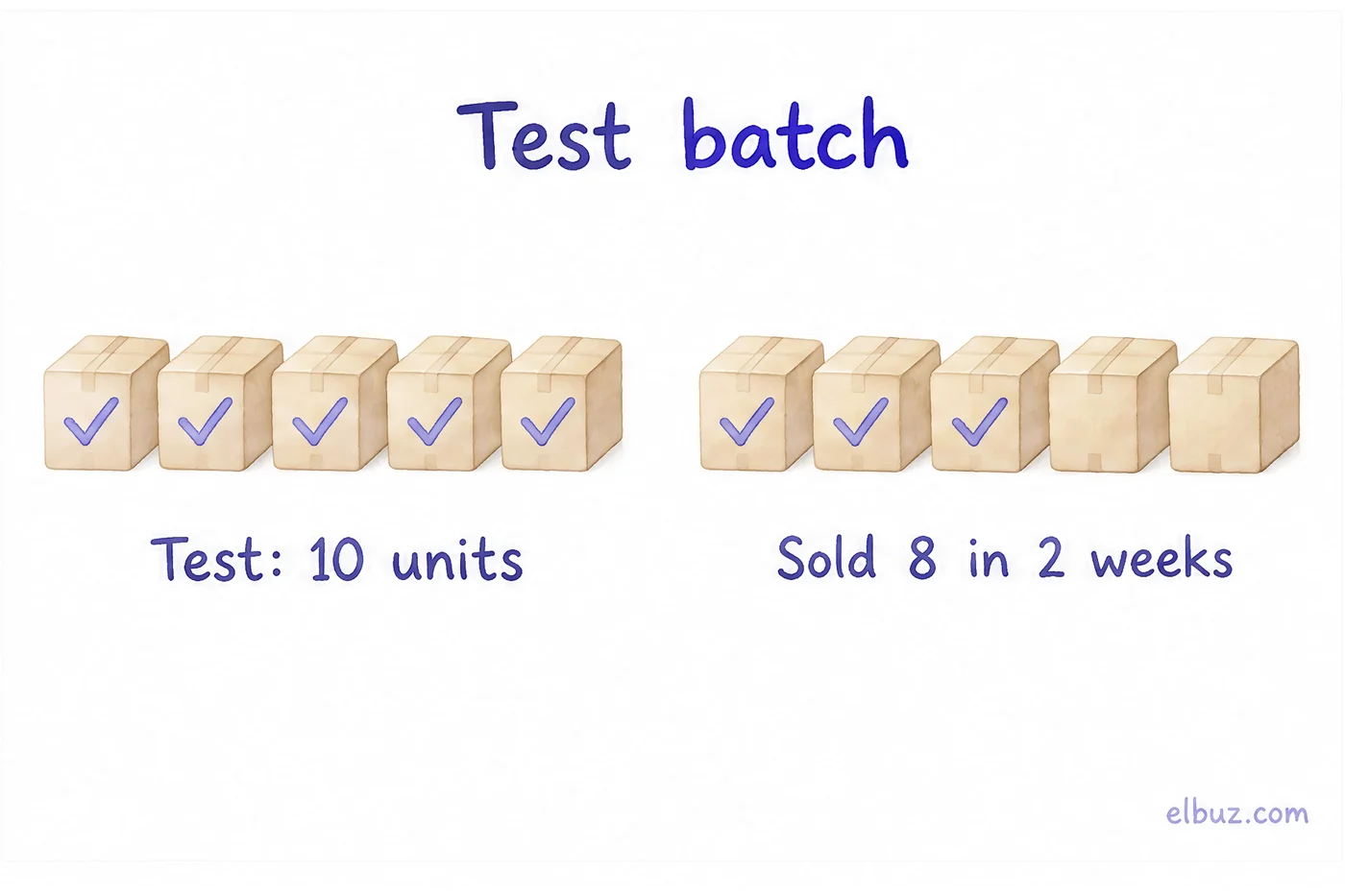
- How many you will sell by the end of the season: 4 × 8 = 32.
- Minus stock on hand: 32 − 2 = 30 to reorder.
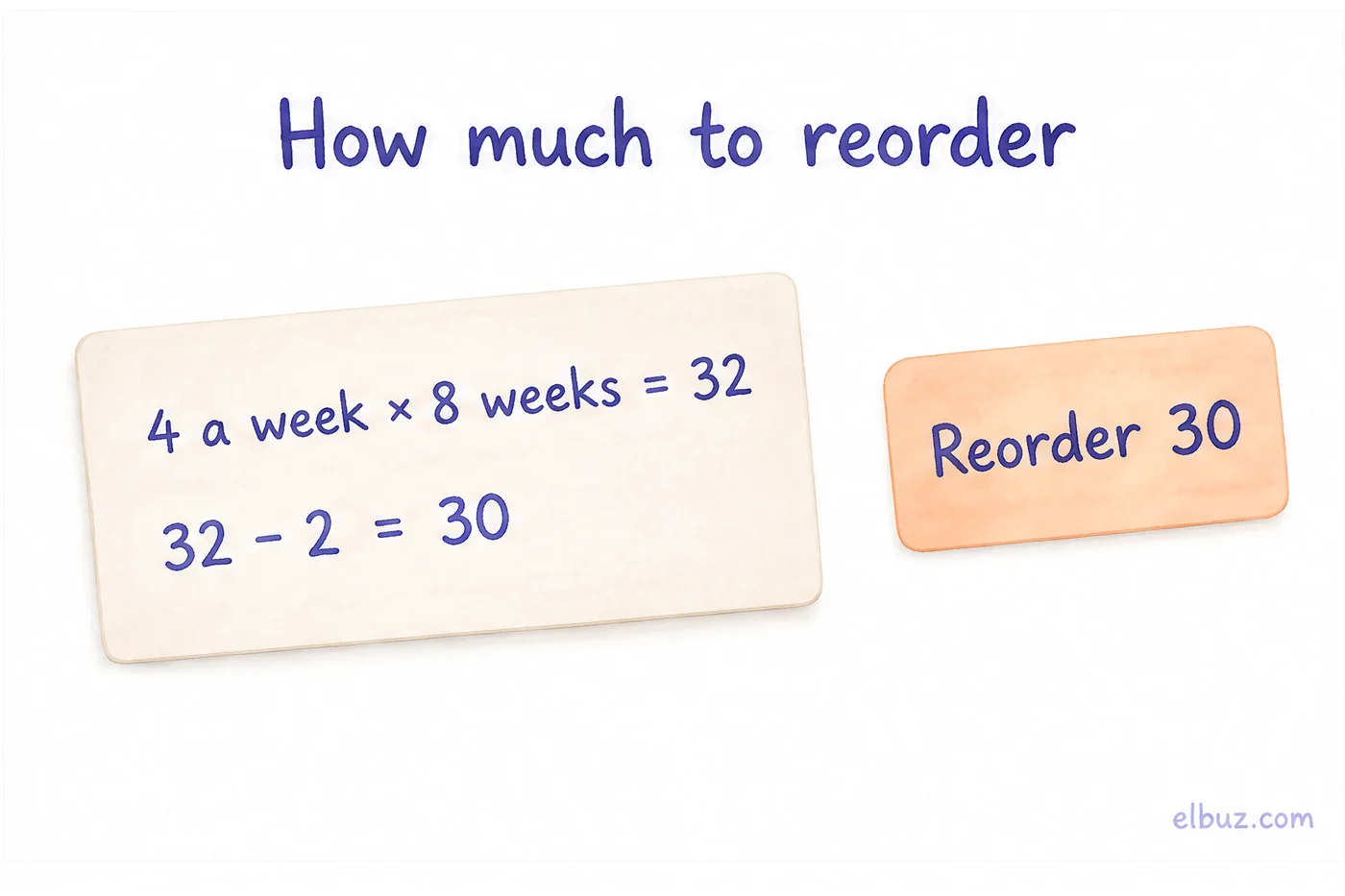
Two corrections. Sales slow down after the peak, so order the 30 in two batches of 15, the second after checking the rate. And for a product with a sharp end of season, like Christmas lights, count the weeks only up to the holidays, not to the end of winter.
What to do with what did not sell
Clear the remaining stock right after the peak, even at a minimal markup: money tied up in winter stock until next November cannot go into your spring range. What to do with products that do not sell at all is covered in the article on dead stock and how to get rid of it.
Winter holidays: separate sales windows
Besides the cold, winter sales are driven by holidays, each with its own short window: Black Friday and Cyber Monday at the end of November, St Nicholas Day on December 6 in several European countries, Christmas on December 25, New Year, and Valentine's Day on February 14. Gifts are bought 1–2 weeks before the date, allowing for delivery, so listings and promotions have to be ready earlier. How to prepare a store for the holiday season is covered in the article on holiday sales ideas.
Christmas products are the riskiest: demand ends in one day, and leftovers wait a year. Buy a smaller batch than feels right and clear it by the end of December.
And what to sell in summer
The method is the same: find products that peak in May–August in Google Trends, calculate the order date from the start of demand and begin with a test batch. The summer season (bikes, scooters, camping gear, fans) starts in spring, so you order in winter.
When it is better to test a seasonal product without buying stock
When you are not sure about the product or have already missed the order date: then you can sell the first season from the supplier's warehouse (dropshipping) and buy stock only of what sells.
Elbuz fetches supplier price lists on a schedule and updates prices and stock on your website and in your product feeds, so a winter product that runs out at the supplier does not stay in your catalog. How supplier feeds are processed, prices recalculated and stock kept current is shown on the supplier price list automation page.
Who it does not suit: if you already know your winter product and have sold it for several seasons, buying a batch at the wholesale price pays more, because the dropshipping price is higher.
Frequently asked questions
What sells well in winter?
Products people search for in the cold months: space heaters, heated blankets, hand warmers, snow shovels, Christmas decorations and gifts. Choose yours by its Google Trends curve and the margin after fees, and start with a test batch.
When should I order winter stock?
Lead time plus a week for listings before demand starts. In the US, space heaters and heated blankets are searched from October and Christmas lights from November, so most winter orders fall in August–October.
What is the most profitable thing to sell right now?
It depends on what one sale leaves you after fees, shipping and returns. Google Trends shows demand; a margin calculation on a few candidates shows profit.
How much stock should I buy for the winter season?
A small test batch in the first season, then reorder: sales per week × weeks left in the season − stock on hand. See the calculation.
What should I sell in summer?
Same question, same method: products that peak in May–August in Google Trends, an order date counted back from the start of demand, and a test batch. Summer stock is planned in winter.
Sources
- Google Trends Help: how the numbers on the chart are calculated (scale from 0 to 100) — support.google.com.
- Google Trends data for "space heater", "heated blanket", "snow shovel", "hand warmers", "long underwear" (one comparison) and "christmas lights" (a second comparison, with "power bank"): United States, web search, October 1, 2023 to October 25, 2026, retrieved via DataForSEO on October 31, 2026.
Checked on October 31, 2026.


